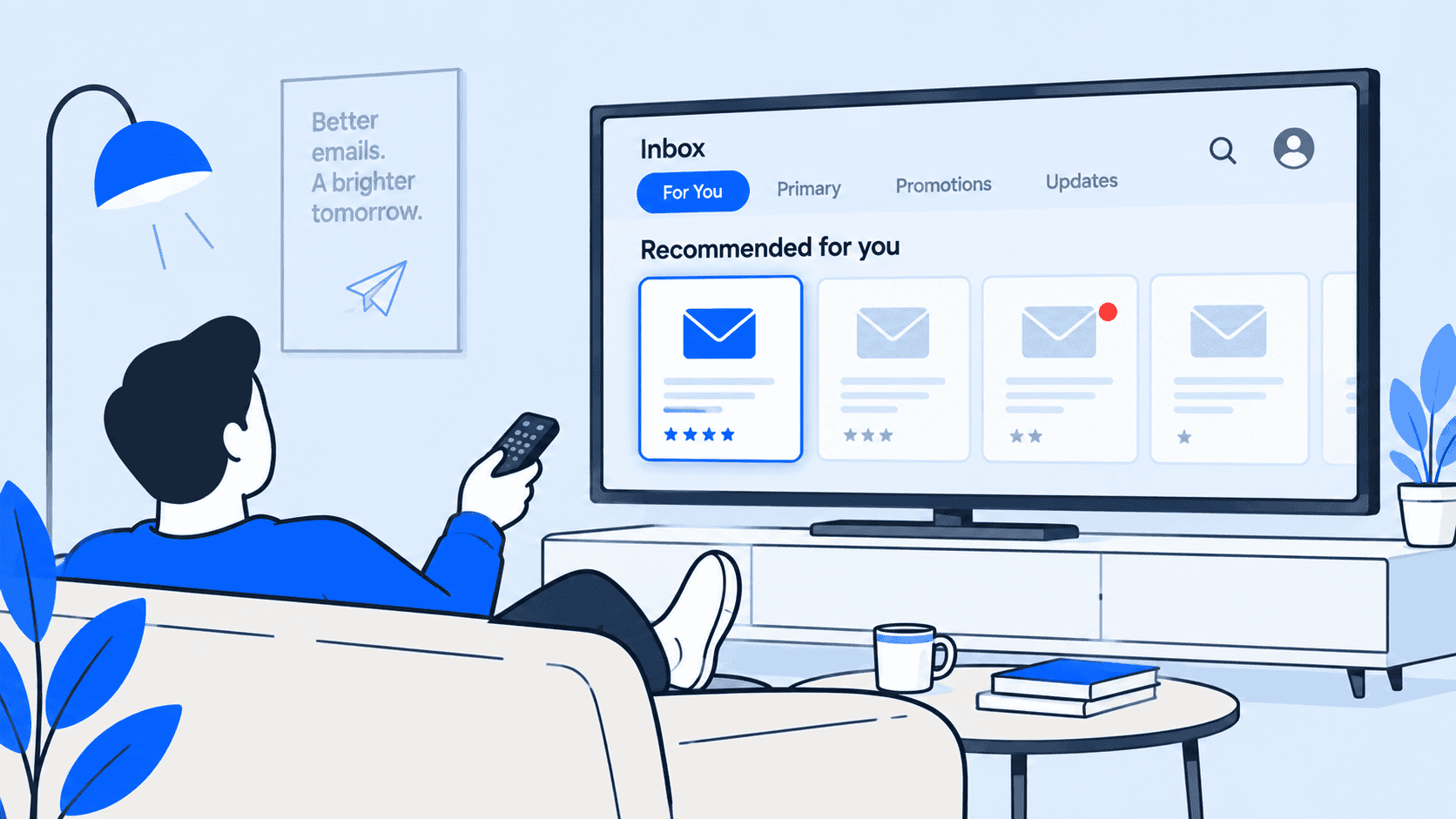
Why Gmail, Yahoo, and Apple Mail increasingly behave more like Netflix than a filing cabinet
About the Author: Jeanne Jennings is a veteran email marketing consultant and strategist with over 20 years of experience. Through her boutique firm Email Optimization Shop, she partners with medium‑to‑enterprise teams in fractional and project roles to audit program performance, design optimization roadmaps, and embed best practices.
Most marketers still think inbox placement works like airport security: your email either gets flagged or waved through.
Pass the technical checks? Into the inbox you go. Trigger a spam filter? Off to junk mail purgatory.
Simple.
Except… that’s increasingly an outdated way to think about the inbox.
To be clear, relevance has always mattered in email marketing. Subscribers have always decided whether to open, click, read, save, ignore, or unsubscribe based largely on one thing:
“How relevant is this message to me right now?”
That’s not new.
In fact, I’ve built much of my career helping clients improve email relevance, not just inbox placement. Because getting into the inbox was never the ultimate goal. The real goal was earning attention, engagement, and action from the subscriber on the other side of the screen.
What is changing is this:
Mailbox providers are becoming dramatically better at recognizing and responding to those engagement patterns.
Today’s inboxes increasingly use AI, behavioral analysis, and machine learning to help users manage overwhelming volumes of email.
They observe what individuals engage with, what they ignore, what they delete immediately, what they consistently open, and what they appear to value over time.
In other words, inbox providers are no longer simply filtering spam. They’re increasingly helping curate relevance.
That means modern inboxes are starting to function less like passive filing cabinets and more like recommendation engines.
In practical terms, a recommendation-style inbox uses engagement signals, behavioral patterns, and AI-driven analysis to help determine which email messages a recipient is most likely to value, prioritize, and interact with over time.
They watch behavior. They identify patterns. They predict interest.
And they use those signals to influence which messages get attention… and which quietly fade into the background.
This shift matters because it changes how marketers should think about email deliverability, inbox placement, and long-term sender reputation.
Technical fundamentals still matter enormously. Authentication, sender reputation, list hygiene, and complaint management remain essential.
But increasingly, technical compliance alone isn’t enough to earn sustained visibility in the inbox.
Modern inbox systems are layering behavioral intelligence on top of those technical signals. They’re evaluating whether recipients repeatedly engage with your emails and using those patterns to shape future inbox experiences.
Which means the question marketers need to ask is evolving.
Not just: “Will this email get delivered?”
But: “Will this email consistently earn attention and engagement over time?”
Because increasingly, the inbox isn’t just filtering messages.
It’s helping recipients prioritize them.
From Spam Detection to Relevance Recognition
Source: Email Optimization Shop by Jeanne Jennings for InboxAlly
For years, marketers approached deliverability as primarily a technical problem.
And to be fair, that made sense.
If your authentication wasn’t configured correctly, your list quality was poor, or your complaint rates were too high, mailbox providers had limited options. They relied heavily on rules, reputation systems, and spam detection technologies to protect users from abuse and unwanted email.
A lot of deliverability advice still reflects that era.
Authenticate your domain.
Warm up your IP.
Monitor complaints.
Maintain list hygiene.
All important. Still true.
Historically, though, many of those systems were designed primarily to answer questions like:
Is this sender legitimate?
Is this sender behaving responsibly?
Does this appear to be a real email relationship… or is it spam?
Mailbox providers had to focus heavily on technical trust signals because they had fewer ways to directly interpret recipient behavior at scale.
But now, AI and machine learning are helping inbox providers recognize something much more nuanced:
How recipients actually engage with the email messages they receive.
Modern inbox systems increasingly evaluate behavioral engagement signals to help determine what each individual recipient is most likely to find relevant. They observe patterns over time. Not just whether a sender technically complies with best practices, but how users consistently interact with messages from that sender.
Do recipients regularly open these emails?
Do they click and spend time reading?
Do they scroll? Reply? Search for the sender later?
Or do they ignore the messages entirely? Delete them immediately? Stop engaging over time?
Those behavioral patterns help mailbox providers better understand the relationship between sender and subscriber, and increasingly influence how future messages are surfaced and prioritized.
Engagement Is Becoming More Nuanced… And More Important
For a long time, marketers treated engagement metrics somewhat simplistically.
Opens were good.
Clicks were better.
Unsubscribes and spam complaints were bad.
And while those signals still matter, today’s inbox ecosystems are evaluating engagement in much more sophisticated ways.
Partly because they can…
Modern mailbox providers now have access to far richer behavioral data than they did even a few years ago. AI and machine learning systems can evaluate not just isolated actions, but patterns of interaction over time.
Did someone open immediately… or ignore the message for three days?
Did they click and spend time engaging with the destination content?
Do they regularly interact with this sender, or only occasionally?
Has engagement increased recently… or steadily declined?
Do they consistently delete messages without reading them?
Those patterns help inbox providers better understand recipient preferences and predict future behavior.
And importantly, these signals are cumulative.
One ignored email usually isn’t a problem. People get busy. Inbox overload is real (Understatement of the year).
But when disengagement becomes a consistent pattern over time, mailbox providers may begin interpreting that as a sign that the sender is becoming less relevant to that particular subscriber.
This is one reason list aging has become such an important issue for marketers.
Subscribers who once eagerly engaged with a brand may gradually become less interested over time. Their needs change. Their priorities shift. Their inboxes become more crowded. Or maybe the content simply becomes repetitive.
Whatever the cause, declining engagement can start affecting future visibility.
And because mailbox providers increasingly personalize inbox experiences at the individual subscriber level, relevance is no longer evaluated only at the campaign or sender level. It’s increasingly evaluated at the one-to-one relationship level.
That’s a significant shift.
It means marketers can no longer rely solely on broad “good sender reputation” assumptions. They also need to think about how consistently individual subscribers demonstrate interest and engagement over time.
It also helps explain why some long-standing email practices are becoming less effective.
Over-mailing “active” segments.
Sending the same content to everyone at the same frequency.
Prioritizing volume over engagement quality.
Those approaches may still generate short-term metrics. But they often create gradual engagement erosion… and increasingly, inbox systems are able to recognize those patterns.
Which brings us to another important reality: Not all engagement signals are weighted equally anymore.
Why Opens No Longer Tell the Whole Story
For years, open rates served as one of the primary ways marketers evaluated engagement.
Did people open the email? Good sign.
Did open rates decline? Potential problem.
Simple enough.
Except the inbox has gotten far more complicated.
Privacy changes, AI-assisted inbox experiences, preview panes, and automated content summaries have all made “opens” a much less reliable standalone indicator of recipient interest.
In some cases, a message may technically register as opened even if the recipient barely noticed it.
In others, a subscriber may consume much of the message directly from a preview, summary, or notification layer without formally “opening” the email at all.
That’s part of why mailbox providers are increasingly looking beyond isolated metrics and evaluating broader engagement behavior.
Not just: “Was this email opened?”
But: “What did the recipient actually do?”
Did they continue engaging with messages from this sender over time?
Did they interact consistently?
Did they appear interested enough to keep the relationship active?
Increasingly, marketers need to ask not just whether subscribers opened an email, but whether inbox providers interpret recipient behavior as a signal of sustained interest and relevance.
This is where recommendation-engine thinking becomes especially relevant.
Netflix doesn’t decide you love a show simply because you clicked on it once. It looks at whether you continued watching, returned later, binged additional episodes, searched for similar content, or abandoned it after five minutes.
Modern inbox systems are increasingly evolving in a similar direction.
They’re trying to distinguish between:
passive exposure
habitual interaction
active engagement
and genuine ongoing interest
And that distinction matters for marketers.
Because it shifts the focus away from chasing isolated campaign metrics and toward building sustained subscriber relationships.
That’s one reason strategies like segmentation, lifecycle management, and cadence optimization have become so important.
Subscribers aren’t static.
Their interests change.
Their needs evolve.
Their engagement levels fluctuate over time.
And increasingly, inbox systems are recognizing those changes right alongside marketers.
This also helps explain why overly aggressive sending strategies can backfire, even when short-term metrics initially look strong.
If subscribers begin disengaging gradually, inbox systems may interpret that as declining relevance. And once engagement patterns start deteriorating, visibility can become harder to recover.
In other words: The inbox is increasingly paying attention not just to whether recipients interact with your emails…
…but whether they continue choosing to interact with them over time.
AI Is Changing How the Inbox Interprets Your Email
To date, we email marketers primarily optimized email for human readers.
Would the subject line catch attention?
Would the email render properly?
Would the copy persuade someone to click?
Those things still matter, of course.
But increasingly, your emails are also being interpreted, summarized, categorized, and prioritized by AI systems before a subscriber fully engages with them.
That’s a meaningful shift.
We’re already seeing inbox providers introduce AI-generated summaries, automated categorization, smart replies, message prioritization, and other tools designed to help users process growing inbox overload more efficiently.
And while many of these experiences still feel relatively new, the direction is clear:
AI is becoming an increasingly active participant in inbox filtering, message prioritization, and the overall inbox experience.
Which means marketers now have two audiences to think about:
the human subscriber
and the systems interpreting the message on the subscriber’s behalf
That doesn’t mean marketers should start writing “for algorithms” instead of people (please, please don’t do this).
But it does mean clarity, structure, consistency, and relevance are becoming even more important.
AI systems tend to reward signals that help quickly establish:
what the message is about
who it’s for
whether it appears trustworthy
whether recipients historically engage with similar content
Confusing messaging, vague subject lines, inconsistent sending behavior, or generic “mass-produced” content may become harder for both humans and AI systems to interpret positively.
This is one reason AI-generated email content can sometimes struggle in the inbox.
The issue usually isn’t that mailbox providers are “detecting AI content” and punishing it directly. The bigger problem is that generic, repetitive, low-differentiation messaging often produces weaker engagement signals from recipients.
And inbox systems increasingly notice those patterns.
On the other hand, highly relevant messages with strong audience alignment may continue performing well regardless of whether AI tools assisted with drafting or production.
The determining factor is still the relationship between sender and subscriber.
AI simply helps mailbox providers recognize the quality of that relationship more effectively and at greater scale. Ultimately, AI systems help inbox providers interpret patterns and prioritize messages, but human subscriber behavior still drives the underlying engagement signals.
This also raises the stakes for marketers when it comes to content strategy.
Subject lines can’t rely entirely on curiosity gaps or vague teasers anymore.
Email structure needs to support fast comprehension.
Messaging hierarchy matters.
Calls to action need to be clear.
And consistency between audience expectations and message content becomes increasingly important.
Because increasingly, the inbox is not just asking: “Is this message legitimate?”
It’s also asking: “Does this appear genuinely useful and relevant for this particular recipient?”
Why Segmentation and Cadence Matter More Than Ever
If inbox systems are increasingly evaluating engagement patterns at the individual subscriber level, one implication becomes very clear:
Treating every subscriber the same is becoming harder to justify.
For years, many marketers relied on broad promotional sends as the default approach. Build a list, create a campaign, send it to everyone possible, and optimize around aggregate metrics.
And to be fair, that approach could work reasonably well for a long time. Especially when inbox systems were less sophisticated about interpreting individual engagement behavior.
But recommendation-driven environments reward relevance and responsiveness.
Which means segmentation, content, and cadence strategy become increasingly important.
Not because segmentation is new. It certainly isn’t.
But because inbox systems are becoming better at recognizing when subscribers consistently engage… and when they don’t.
A subscriber who eagerly clicks weekly product updates may respond very differently to daily promotional campaigns.
Another subscriber may love educational content but rarely engage with sales-focused messaging.
Some recipients want frequent communication.
Others prefer occasional interaction.
And many subscribers move between those states over time.
Modern inbox systems increasingly recognize those behavioral differences whether marketers actively manage them or not.
That’s one reason over-mailing highly engaged segments can quietly become problematic.
Marketers often assume:
“These subscribers are active, so sending more should drive more results.”
Sometimes it does… temporarily.
But sustained overexposure can eventually lead to fatigue, declining interaction, and gradual disengagement. And once engagement patterns begin weakening, inbox visibility may begin weakening alongside them.
In other words, engagement isn’t static. It’s dynamic.
And inbox systems increasingly evaluate it that way.
This is also where lifecycle management becomes critically important.
New subscribers often behave differently from long-term subscribers.
Recently active users behave differently from cooling audiences.
Disengaged subscribers may need reactivation strategies… or sometimes suppression.
Yet many email programs still rely heavily on static segments and uniform sending frequencies.
That creates a mismatch between subscriber behavior and sender behavior.
And recommendation-style inbox systems are increasingly able to detect that mismatch.
The marketers most likely to succeed moving forward won’t necessarily be the ones sending the highest volume of email.
They’ll be the ones best able to maintain ongoing relevance across different audience segments, lifecycle stages, and engagement patterns over time.
Because increasingly, inbox placement is becoming less about how loudly you send…
…and more about how consistently recipients demonstrate they want to hear from you.
What Marketers Should Do Differently Now
If the inbox is increasingly functioning like a recommendation engine, marketers may need to rethink some long-standing assumptions about email success.
Because the goal is no longer simply: “Get the message delivered.”
It’s increasingly: “Build and maintain patterns of engagement that inbox systems learn to trust.”
That requires a broader view of deliverability. One that extends beyond technical compliance and considers the entire subscriber experience.
For many organizations, that starts with audience quality.
A smaller audience that consistently engages with your emails is often far more valuable than a massive database filled with disengaged subscribers. High volume may create the appearance of scale, but weak engagement patterns can gradually undermine inbox visibility over time.
Consistency matters too.
Huge spikes in volume, erratic sending behavior, or abrupt changes in cadence can create unstable engagement patterns, especially if subscribers weren’t expecting the increase. Recommendation-style systems tend to reward predictability and sustained positive interaction, not sudden bursts of activity followed by silence.
Content quality also becomes increasingly important.
Not “creative for creative’s sake,” but content that demonstrates clear audience understanding:
relevant messaging
thoughtful segmentation
useful information
appropriate timing
realistic frequency expectations
In other words, marketers need to think less like broadcasters and more like relationship managers.
That doesn’t necessarily mean sending less email.
It means sending email more intentionally.
Some subscribers may welcome frequent communication.
Others may prefer lighter-touch engagement.
Some may actively seek promotional offers.
Others engage primarily with educational content.
The more marketers can align sending strategy with actual subscriber behavior and preferences, the more likely they are to sustain healthy engagement patterns over time.
This is also where monitoring engagement trends becomes increasingly valuable.
Not just campaign-by-campaign metrics, but broader behavioral patterns:
Which segments are gradually disengaging?
Which content themes consistently drive interaction?
Where is fatigue beginning to appear?
Which subscribers still demonstrate meaningful interest?
Because increasingly, inbox systems are evaluating those same patterns right alongside marketers.
And perhaps most importantly, marketers should resist the temptation to look for shortcuts.
Recommendation systems are notoriously difficult to “game” long term. Whether we’re talking about streaming platforms, social feeds, search engines, or inboxes, sustainable visibility usually comes from consistently delivering experiences people genuinely value.
Email is becoming no different.
The marketers most likely to succeed in this environment won’t necessarily be the ones with the biggest lists, the highest sending volumes, or the cleverest technical tricks.
They’ll be the ones who consistently earn engagement, because recipients repeatedly decide their messages are worth paying attention to.
Where InboxAlly Fits Into This Evolution
As inbox systems become more behavior-driven, marketers need tools that support long-term engagement health, not just short-term inbox placement fixes.
That’s an important distinction.
Because if modern deliverability increasingly reflects the strength of the relationship between sender and subscriber, then sustainable success comes from reinforcing positive engagement patterns over time.
That includes:
sending to the right audiences
maintaining healthy list practices
managing cadence thoughtfully
improving consistency
and creating email experiences subscribers continue choosing to engage with
In that environment, deliverability tools can’t simply focus on technical compliance alone.
They need to help marketers strengthen the engagement signals that modern inbox systems increasingly value.
That’s where platforms like InboxAlly fit particularly well into the conversation.
InboxAlly’s approach aligns with the broader industry shift from purely technical deliverability management toward engagement-centered inbox optimization. Rather than focusing only on technical setup, the platform helps marketers reinforce the kinds of positive engagement signals modern inbox systems increasingly value.
And increasingly, that’s what modern inbox systems are evaluating.
Not just: “Did this sender authenticate properly?”
But: “Do recipients consistently interact positively with this sender’s messages?”
That distinction matters because recommendation-style inbox systems reward patterns, not isolated campaigns.
A single successful send isn’t enough to establish long-term inbox trust. Consistent engagement over time is what strengthens sender reputation and visibility.
Which means marketers need to think about deliverability less as a technical checklist… and more as an ongoing audience relationship strategy.
The good news? That’s ultimately better for everyone.
Better for subscribers, because they receive more relevant and useful messages.
Better for mailbox providers, because engagement helps improve the inbox experience.
And better for marketers, because the brands that genuinely earn attention are more likely to sustain visibility over the long term.
In many ways, the inbox is evolving toward what marketers should have wanted all along:
Not simply more delivered email. But more wanted email.
The Future Inbox Will Reward Earned Attention
For years, marketers treated deliverability and engagement as somewhat separate disciplines.
First, get into the inbox.
Then, worry about performance.
But increasingly, those two things are becoming inseparable.
Modern inbox systems are paying closer attention to how recipients actually interact with email over time… and using those behavioral patterns to shape future inbox experiences.
That doesn’t mean technical fundamentals suddenly stop mattering. They absolutely still do.
But technical compliance is increasingly becoming the starting point, not the finish line.
The bigger challenge now is maintaining ongoing relevance in an environment where inbox providers are actively helping users prioritize what matters most to them.
And honestly? That’s probably where email marketing was always headed.
Subscribers have always voted with their attention.
The difference now is that mailbox providers can increasingly recognize those signals at scale and respond accordingly.
That’s why marketers who continue relying heavily on volume, broad blasts, or short-term engagement spikes may find results becoming harder to sustain over time.
Meanwhile, marketers who focus on:
audience quality
thoughtful segmentation
healthy cadence
strong subscriber expectations
and consistently useful content
are more likely to build the kinds of engagement patterns modern inbox systems increasingly reward.
In many ways, the inbox is becoming less like a passive container for messages and more like an active curator of attention.
Which means the brands most likely to succeed in modern email deliverability environments won’t be the loudest senders. They’ll be the ones recipients repeatedly choose to engage with.
And increasingly, inbox providers are learning to notice the difference.
AI + Client Disclosure
This article was written in collaboration with my custom ChatGPT AI Agent, which assisted with brainstorming, outlining, and drafting support.
The analysis, opinions, recommendations, and slightly opinionated observations about email marketing are my own.
As always, the perspectives shared here reflect my independent experience working with email marketing and deliverability programs across a wide range of organizations and industries.
About Jeanne Jennings
Jeanne Jennings is a veteran email marketing consultant and strategist with over 20 years of experience. Through her boutique firm Email Optimization Shop, she partners with medium‑to‑enterprise teams in fractional and project roles to audit program performance, design optimization roadmaps, and embed best practices.
She also leads hands-on training workshops, both public and private, to upskill internal teams in email strategy, campaign execution, and use of AI. When she’s not helping clients refine their email programs, you’ll find her programming the Email Innovations Summit, managing the Only Influencers community of email industry professionals, teaching digital marketing at Georgetown University (Hoya Saxa!), or watching hockey (Let’s Go Caps!).
About InboxAlly
InboxAlly is a deliverability software platform built to help your emails land in the inbox, not the spam folder. Our tools include real‑time warm-up, engagement signals, seed testing, deliverability diagnostics, and domain/IP reputation repair. All without needing to hand over direct access to your sending infrastructure.
Whether you’re launching a new IP/domain, recovering from deliverability issues, or scaling a multi‑sender program, InboxAlly gives you the infrastructure and insights to send with confidence and see measurable improvements in open rates, placement, and sender credibility.
View our Plans and Pricing, including our free 10-day trial (no credit card required)