
Better inbox placement! Bigger scale! More revenue! Based on their promises, Smartlead and Instantly look interchangeable. In practice, not so much, as they’re built for a different purpose.
One is for raw sending power and deliverability control. The other for outreach, leads, and light CRM. If you just compare the features, you miss the important question: which one fits your needs, and how much complexity are you willing to accept?
In this article, we’ll look at Smartlead vs Instantly through the only lenses that matter: deliverability, scale, pricing, user experience, and how they perform in day-to-day cold-email settings.
Key takeaways
- Smartlead is for agencies and bigger outbound teams. It’s built for sending a lot of cold emails from multiple inboxes and domains. This setup makes more sense if you manage several clients or brands.
- Instantly is for smaller, self-contained environments. It gives you one place to find leads, enrich them, write emails with AI, and track replies. A better solution if you don’t have a big sales stack and want to keep it simple.
- Quick rule of thumb: If you already have data sources and a CRM and just need a sending platform, pick Smartlead. If you want one tool to find, enrich, and email leads from the same dashboard, go for Instantly.
Smartlead vs Instantly: quick verdict before we split hairs
Smartlead is a tool for bigger outbound setups: lead generation agencies and internal SDR teams with higher email volumes. It handles multiple domains and inboxes, which is why it’s generally used in setups with multiple campaigns running at once.
Instantly is more for the “small but serious” crowd: lean sales and marketing teams or founders that want leads and outreach without having to use third-party tools. You get a leads database, enrichment, AI help for copy, pre-written email templates, and a light CRM wrapped around your outreach campaigns, so you’re not getting bogged down by three tools just to send an email sequence.
Both email outreach tools cover the basics people obsess over on comparison pages: user-friendly interface, unlimited email accounts, warmup, rotation, and automation. The useful difference is how each one behaves when you’re trying to land more meetings week after week.
Advanced features you need to know about
Sending, sequencing, and channels
Once you’re inside the tool, the first question is simple: what can I send, and how flexible is it?
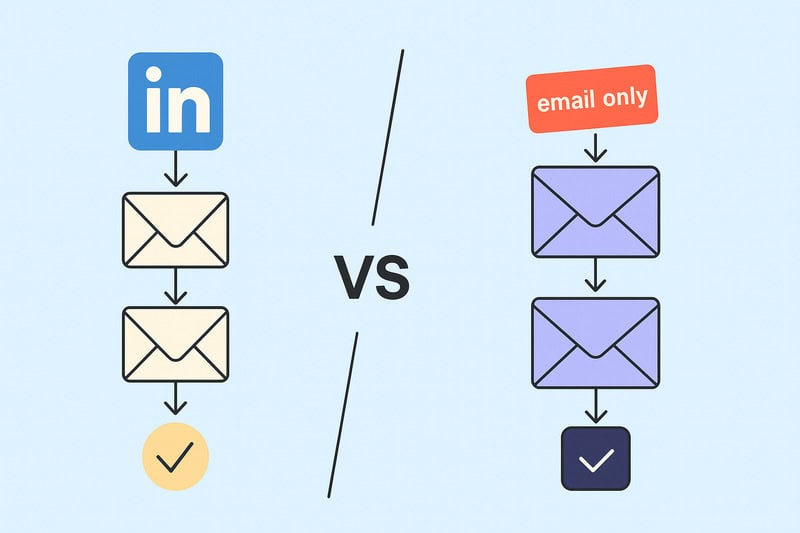
In Smartlead, email sequences can be combined with LinkedIn steps and webhooks, letting you send people down different paths based on what they do. Pretty useful when you’re running several cold email campaigns at once, as you can email every prospect with a different follow-up.
Instantly, is email only. You build sequences, set timing rules, let inbox rotation spread the load, and use the AI email writing assistant to speed up replies. For most use cases, that’s enough: set up a sequence, let the platform handle timing and routing, and get ready to handle replies.
Deliverability and reputation
Smartlead’s bells and whistles are in its deliverability tooling: email warm-up, IP and inbox rotation, and reporting that makes it easier to notice dwindling domain reputation.
Instantly offers warmup and deliverability features, too, but neither will do as good a job as a dedicated email deliverability tool like InboxAlly.
Regardless, deliverability usually hides the story under the numbers:
- If opens are low everywhere, you’re likely dealing with reputation or list quality.
- If Gmail is much worse than the rest, your domain is already under closer review, and it’s time to slow down and fix the root causes.
Data, leads, and CRM
This is the biggest structural difference.
Smartlead assumes you already have leads and a CRM. Instantly goes further up the funnel with built-in contact database, enrichment, and simple CRM-style views. If you don’t have data or a CRM setup yet, that “prospects + outreach in one place” approach can be a huge advantage.
Pricing and scalability: Is “cheap” really cheap?
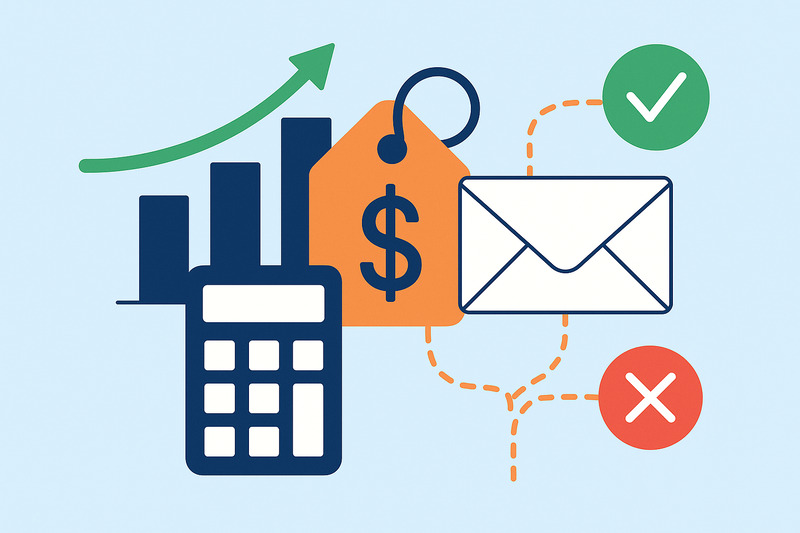
As for the pricing plans, Smartlead’s lower tiers are $39 (basic plan) and $94 (pro plan), with the custom plan starting at $174. Instantly comes in at $37 and goes into the $97+ range as you add seats and extras like data and AI. So far, nothing dramatic.
The difference is more obvious when you start scaling.
With Smartlead, most of the bill is tied to the plan level and how much you send. If you’re an agency or lead-gen team running several clients, the cost per account often drops as you add more domains and campaigns. One subscription can carry a lot of outbound if you’ve already solved leads and CRM elsewhere.
Instantly has more moving parts in the bill. You’re paying for sending, then adding the leads database, enrichment, and credits on top. That’s fine at small or mid-level volume, but if you depend heavily on its data and AI, your monthly spend can grow faster than you expect.
A few simple ways to think about it:
- You’re sending 20,000 emails a month, pricing isn’t the deciding factor here; both are reasonable
- You’re sending 150,000 emails a month. Smartlead often wins here because its model fits agency-style volume better.
- You don’t have leads and plan to pull most of them from the platform. Instantly can be worth the higher total cost because you’re paying for data and sending in one place.
Real-world usage: what the metrics usually tell you

Numbers tell you more about your system than about the tool. Smartlead or Instantly just make the pattern easier to see.
If you’re getting decent opens but weak replies across every provider, that’s not a platform issue. That’s usually a weak offer, bad targeting, or poorly personalized email campaigns. People are curious enough to look, but they don’t see a good reason to write back. Switching from Instantly to Smartlead (or vice versa) won’t fix a message nobody cares about.
If Gmail performs worse than Outlook or Yahoo, you’re dealing with sender reputation issues, and Gmail is stricter here. In that situation, Smartlead’s control over inboxes and sending speed can help you slow down, spread volume, and protect stronger domains, but only if your DNS, warmup, and list hygiene are already handled.
If deliverability looks fine but your pipeline is empty, your problem is who you’re emailing, not how. In that case, Instantly’s leads database and enrichment can help upgrade the list itself.
Bottom line: consent, list quality, and message quality hold everything. If you don’t fix those, chances are you’re just moving the problem to a new login screen.
Why you still need a dedicated deliverability tool
Sometimes, no matter what you do, the numbers don’t match your cold email outreach efforts. Smartlead or Instantly are set up, inboxes are warmed up, limits are reasonable… and Gmail still keeps you at arm’s length. That’s unfortunately not a “write a better subject line” problem anymore
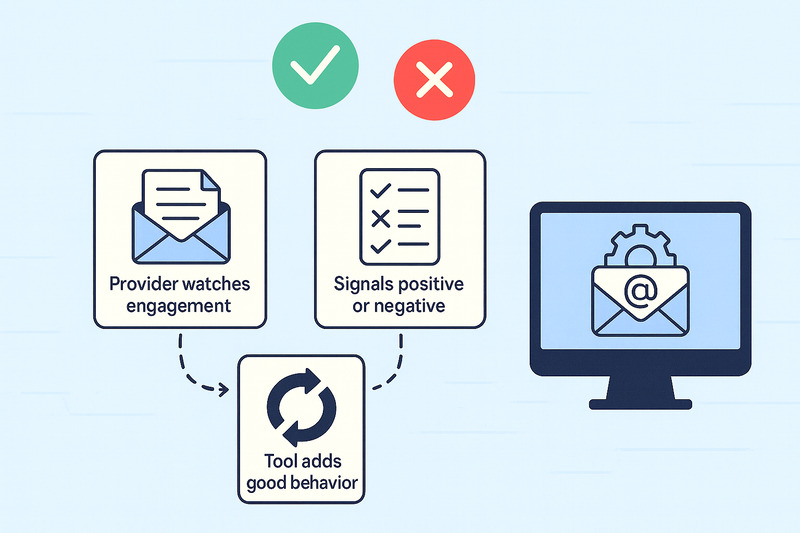
Today, mailbox providers watch what people do with your emails over weeks and months to decide your sender reputation:
- Do they open and scroll through the content?
- Do they click a link or reply?
- Do they pull a message out of spam and let it stay in the inbox next time?
- Or do they ignore most of your campaigns from the moment they arrive?
Deliverability tools like InboxAlly are built to reintroduce those positive signals into your struggling campaigns. InboxAlly runs seed accounts that behave like real subscribers and take the same actions mailbox providers use to score your domain and IP. Over time, that stream of good behavior can improve a sender reputation and get you results you’ve never seen before.
If you’d like to stop being dragged down by a poor reputation and get back to focusing on what makes your business run, book a free InboxAlly demo and see it work on your own setup.
How to choose: a simple decision path
In serious outbound, one tool is almost never enough. You might pair a sending platform with a CRM and a data tool, or lean on an all-in-one and add only what’s missing. So before you commit, ask yourself three simple questions:
- Do we already have good data and a CRM?
- Do we care more about fine-grained control, or about leads and outreach sitting in one place?
- Is our main problem volume, inbox placement, or that we’re emailing the wrong people to begin with?
Agencies and heavy outbound programs usually feel more at home in Smartlead. Lean teams that need leads and outreach together tend to do better with Instantly.
So the useful question isn’t “which one is better?” It’s: what would a good outbound program look like six months from now, and which of these two would you be happy to run it on when the novelty wears off?