
“AI” is on every pricing page now. Every tool has a copilot, an assistant, a smart something. Most of it is a subject line generator with better branding. The question worth asking before you spend money is what the AI is doing to the thing that matters: whether your email reaches the person you’re trying to talk to.
This is an especially serious question in B2B deliverability. Inbox providers are running classification models that factor in engagement data, sender behavior, and domain reputation data points that no human checks manually anymore. The systems judging your mail are machine-driven, which means the tools trying to influence them need to be too.
Most “AI deliverability tools” don’t meet that bar. To make that distinction easier for you, the six АI email tools below are broken down by what their AI does, who each one is built for, and where each one is missing. Let’s begin!
Key Takeaways
- Not all AI in deliverability tools is equal. Adaptive warm-up that responds to live reputation changes is categorically different from AI that only generates subject line variations. The latter can introduce unnatural patterns that hurt placement rather than help it.
- Deliverability is ongoing work. The best AI tools in this category don’t just warm up a domain; they monitor and adjust over time, catching reputation changes before they impact your campaign.
What separates real AI from a marketing label
Before the list, let’s talk about the difference between adaptive AI and cosmetic AI.
Adaptive AI adjusts warm-up speed and engagement patterns based on data around domain age, current reputation, and how specific providers are responding. It learns. Cosmetic AI generates unique subject lines or varies email body copy to make warm-up emails look less robotic. That’s not meaningless, but it’s not intelligence, and when the generated content deviates too far from how your campaigns normally read, it can create patterns that providers punish rather than reward.
Real-time monitoring comes into the picture for the same reason. A dashboard that shows you a “reputation score” refreshed weekly is decorative. A tool that warns you as soon as a blacklist status changes or spam placement increases leaves room for some action that can make a huge difference in the moment.
Keep that idea handy as you read through the list.
1. InboxAlly
Best for: marketers and agencies running warm-up on multiple domains who don’t want to switch ESPs or hand over account access
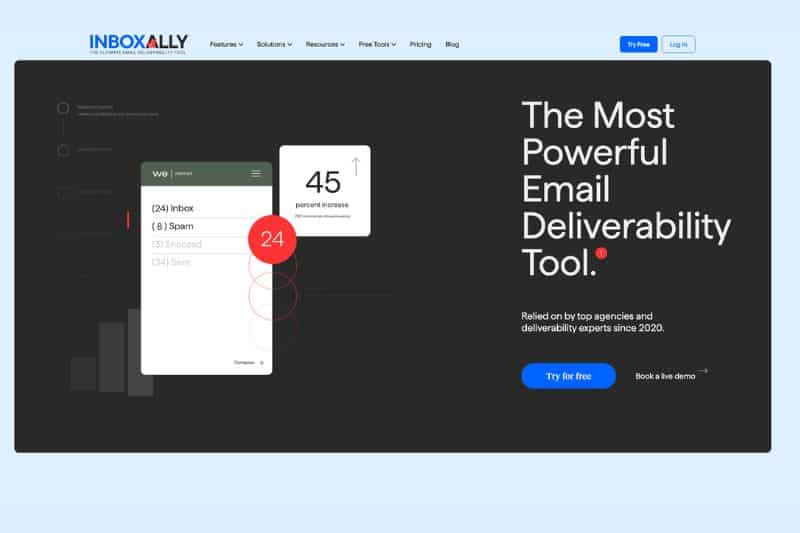
InboxAlly works by deploying seed accounts that interact with your emails the way engaged recipients would by opening, scrolling, clicking, replying, moving messages out of spam and promotions. Those behaviors are what inbox providers use to classify future sends, and InboxAlly generates them at scale before and during campaigns. It works with any sending platform: Gmail, Outlook, Yahoo, Zoho, and custom SMTP setups, without requiring API access to your email accounts.
What makes it stand out from basic warm-up tools is the depth of engagement simulation as InboxAlly adds scroll behavior, link clicks, reply patterns, and spam/promotions rescues, which covers the full range of behavioral patterns that providers weigh most heavily. Engagement profiles are customizable and let you dial in your own settings or use presets for scenarios like reputation protection or new domain warm-up.
Watch out for: Pricing starts at $149/month and goes up with additional sender profiles. Smaller marketing teams or low-volume senders may find the cost harder to justify.
Pricing: Starts at $149/month; scales by sender profiles and daily seed volume. 10-day free trial, no credit card required.
Inbox providers don’t care that you meant well. They care what recipients do. InboxAlly trains mailbox providers using real recipient-like behavior, so your reputation improves before and during campaigns, all without switching ESPs or handing over account access. Start the 10-day free trial and see how better inbox placement impacts your results.
2. MailReach
Best for: B2B outreach agencies that send exclusively through Google Workspace or Office 365 and want a warm-up that reflects that
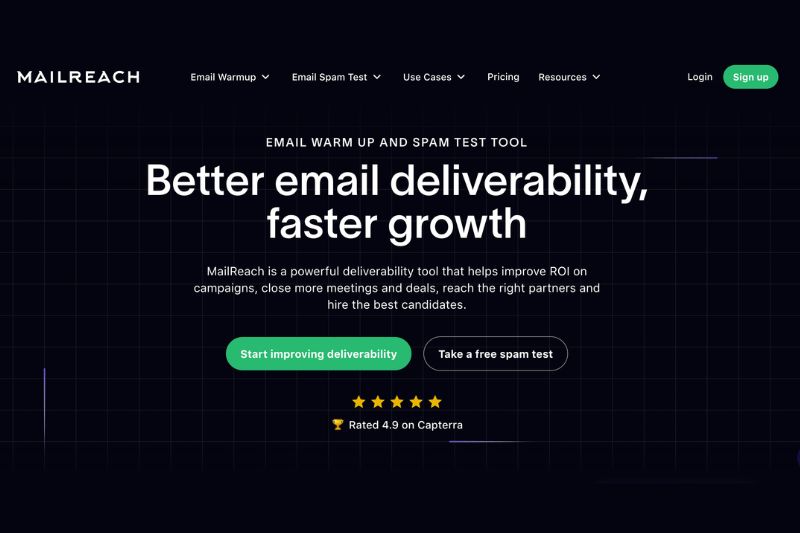
MailReach runs warm-up exclusively through a network of real Google Workspace and Office 365 inboxes, which are also the most important providers in B2B. Consumer inboxes like Yahoo or Zoho aren’t where a lot of B2B conversations happen, so a warm-up network diluted with them makes up for a smaller reputation increase where it counts. It’s built-in machine learning varies timing, reply patterns, and subject lines to mimic natural human behavior rather than running a fixed schedule.
The Co-Pilot, one of the key features, handles real-time monitoring with tracking placement trends between providers, flagging declines, and sending alerts before reputation damage compounds. For agencies managing multiple clients, MailReach also exposes a warm-up API so deliverability can be integrated directly into existing sales or CRM workflows.
Watch out for: Its tight B2B-only network is a strength for most readers here, but if your sends cross into consumer inboxes regularly, that network composition becomes a limitation.
Pricing: Starts at $25/inbox per month.
3. Smartlead
Best for: agencies and high-volume senders who want deliverability, inbox rotation, and outreach tools all under one roof
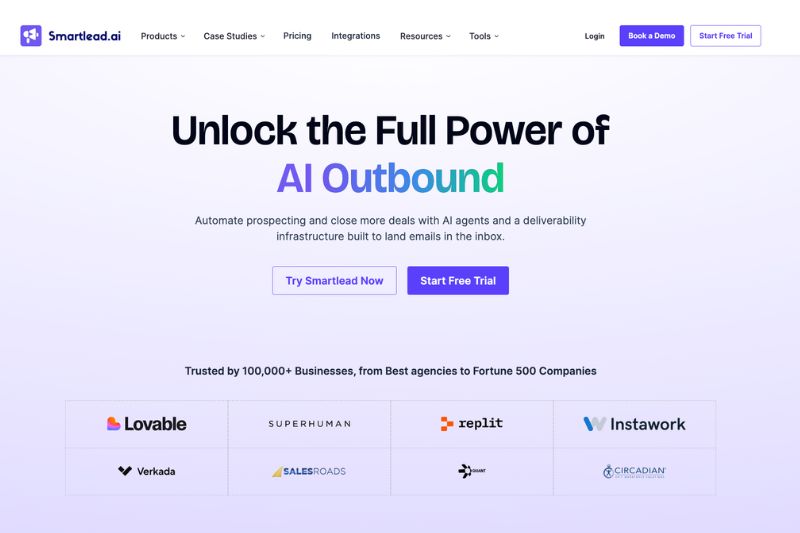
Smartlead doesn’t treat deliverability as a separate concern but instead bakes it into the sending infrastructure. Unlimited email warm-up is included in all plans, dedicated IP servers are provisioned per campaign, and the SmartServers system monitors bounce rates, spam flags, and reputation signals in real time, adjusting automatically. For any setup running dozens of client accounts, the auto-rotating mailbox feature distributes send volume to multiple inboxes to avoid bottlenecks at any single sender.
The AI aspect is functional as it handles send-time optimization, reply classification, and warm-up pacing, not just content generation. The master inbox consolidates all campaign replies from different clients into one view, with AI categorizing leads by intent so teams focus time where it matters.
Watch out for: Smartlead is a full outreach platform, not a standalone deliverability tool. If all you need is warm-up and monitoring for an existing setup, you’re paying for infrastructure you won’t use.
Pricing: Starts at $39/month for the basic plan.
4. Warmy.io
Best for: senders juggling multiple ESPs who want an AI-paced warm-up running in the background without much manual involvement
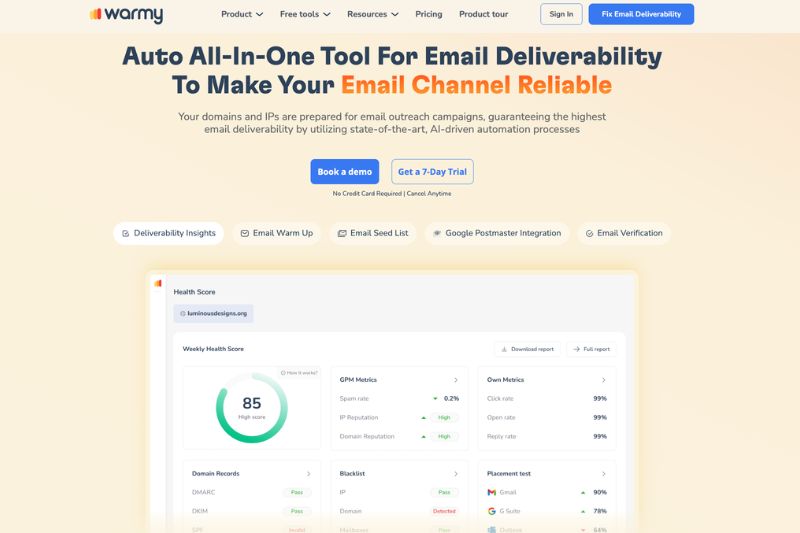
Warmy’s AI adjusts warm-up pacing dynamically, factoring in domain age, inbox maturity, and current reputation rather than following a preset schedule. Setting it up is fairly simple: you connect a mailbox, choose a warm-up target, and the platform handles the rest. It supports Gmail, Outlook, Yahoo, Zoho, and practically every major SMTP service, including SendGrid, Amazon SES, and Mailgun, which makes it one of the more flexible options for anyone who sends email across different providers.
Besides the warm-up, Warmy includes a deliverability checker, email health test, and template analyzer that detects potential spam triggers before a campaign goes out. Authentication diagnostics cover SPF, DKIM, and DMARC.
Watch out for: Its network includes consumer inboxes alongside business ones. Engagement from Yahoo and Zoho accounts has a much smaller impact for pure B2B outreach.
Pricing: Not publicly listed; G2 reports plans starting around $49/inbox per month.
5. Instantly
Best for: cold outreach teams that want warm-up, pre-launch placement testing, and campaign sending all in one
Instantly automates warm-up, blacklist monitoring, and inbox placement testing and ties all of it directly to outreach campaigns. When a sending account crosses a deliverability threshold, the platform pauses it automatically. That kind of help matters at scale, where a single account sending into spam folders can pull down domain reputation across a whole sequence.
Placement testing is particularly useful pre-launch because you can validate inbox placement before a campaign goes live, rather than discovering problems with open rate data afterward. More than 20,000 sales teams use the platform, which also means the warm-up network has a large volume of contact data to work with. AI-powered features extend into campaign personalization (ai generated subject lines, email bodies, follow-up sequences) while the deliverability tooling is a standalone feature.
Watch out for: Like Smartlead, Instantly is a full outreach platform. The deliverability features are excellent, but you’re also adopting a sending infrastructure, not just monitoring.
Pricing: Basic plan starts at $37/month.
6. Folderly
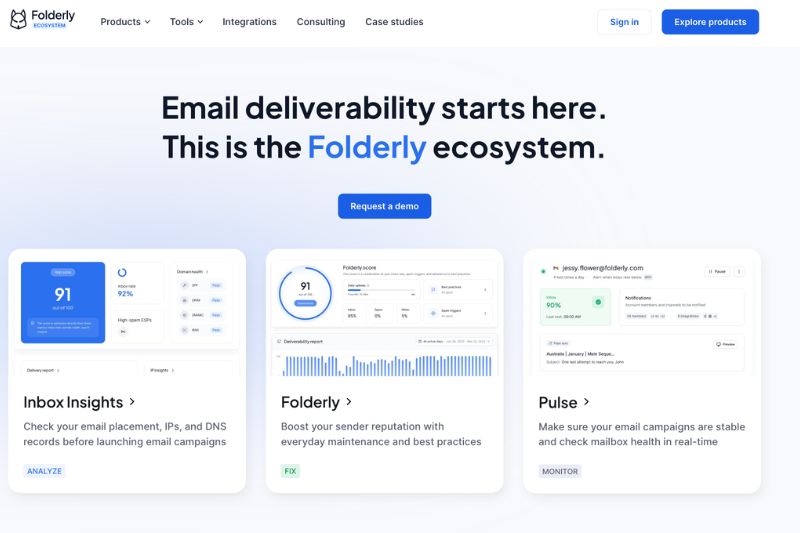
Best for: large organizations with high-stakes sending where having an expert monitoring deliverability alongside the software justifies the price
Folderly is at the consultancy end of this spectrum since it combines smart warm-up, continuous placement monitoring, and in-depth authentication diagnostics, but it also comes with a team. Alerts fire via email, Slack, and SMS when emails end up in spam. Inbox Insights dashboards track domain health, IP reputation, and spam content analysis over time. For larger email environments where deliverability failure has material revenue consequences, that combination of tooling and human oversight is hard to replicate with self-serve email marketing platforms.
The AI features are good, but complementary rather than the core product differentiator. They include things like spam trigger analysis, placement testing across ISPs, and actionable recommendations.
Watch out for: At $120/inbox per month, Folderly is the most expensive option here by a significant margin. It’s best suited for enterprise sales teams with a budget to match. SDR pods and mid-market teams will likely find InboxAlly more proportionate.
Pricing: Starts at $120/inbox per month.
The right tool is only half the battle
AI has genuinely changed what’s possible in email deliverability by making continuous reputation management something a small team can pull off. The AI email marketing tools above are good. Some are excellent. But none of them work on autopilot forever.
If you want to stay in the inbox, make sure to treat deliverability as an ongoing discipline. Pick the tool that fits your needs, learn what intent signals are telling you, and adjust when things change. The technology handles the basics. The judgment still has to be yours.
If you want a quick way to turn that discipline into results, start a 10-day InboxAlly trial and measure what happens to placement over your next few email campaigns when mailbox providers know your mail is wanted.