
From phishing attempts and malware to endless inbox junk, businesses face email threats every day. Without the right protection, one malicious message can compromise an account, expose sensitive data, or disrupt normal operations.
A spam gateway acts as the first line of defence by inspecting suspicious emails before they reach the mail server or inbox. This guide explains how spam gateways work, what threats they block, and how cloud-based and on premises options compare.
Key Takeaways
- A spam gateway is an email security system that filters incoming and outgoing messages before they reach the mail server or inbox.
- Spam gateways use reputation checks, content analysis, authentication data, and threat detection to block spam, phishing, malware, and spoofed messages.
- Businesses can choose between on-premises gateways for greater control and cloud-based gateways for easier scaling and management.
Spam Gateways: The First Barrier to Email Threats 
If your mail server was a secured building, would you rather stop intruders at the gate or deal with them once they’re already inside? Probably the former, and that’s exactly what spam gateways do. They detect malicious URLs, phishing emails, and spam before they ever enter the network.
This spam filtering software isn’t just looking for common spam clichés like “limited-time offer.” Spam gateways go deeper into every email’s origin and contents. They cross-check IP addresses against blocklists and evaluate email authentication using:
- DKIM (DomainKeys Identified Mail)
- DMARC (Domain-based Message Authentication, Reporting & Conformance)
If the message triggers a security rule, the gateway may quarantine it, route it to spam, add a warning, temporarily defer it, or reject it, depending on the configured policy.
Unlike inbox-level filtering, a spam gateway can inspect and block suspicious messages earlier in the mail flow, before they reach the intended inbox. This keeps your corporate mail servers free of unsolicited clutter and potential attacks. If you’re handling sensitive data or dealing with strict compliance needs, this protection is non-negotiable.
Using an anti-spam gateway helps you preserve your network’s integrity, data security, and uptime. It saves you from wasting hours sifting through junk and lets you focus on the actual work.
How Spam Gateways Identify Threats

Spam gateways don’t rely on a single method to block threats but on multiple layers of defense designed to catch emails with harmful intentions.
The process usually starts with reputation checks, where the sender’s IP is compared against blacklists. If the IP has a poor reputation, the gateway may apply stricter filtering, delay the message, route it to spam, or block it, depending on its rules and the other signals it detects.
Next comes header analysis, where the gateway inspects the metadata: Is the sender domain spoofed? Were hundreds of recipients blasted simultaneously? If anything looks off, it’s an instant warning sign.
Then comes content inspection, where the email’s body, links, and subject line are checked for phishing cues or spammy phrases. Finally, it verifies the sender using standard email authentication methods to confirm that the email is truly authorized by the sender’s domain.
This layered strategy balances precision and security to minimize false positives and negatives. It’s built to keep your email system safe from modern cyber threats.
But there’s one method that’s particularly effective against mass spam attacks. Let’s talk about greylisting…
Greylisting: The Spam Filter’s Secret Weapon

Greylisting plays a clever trick on spammers, and it works! Here’s how: when an email hits the gateway spam filter, it gets temporarily rejected with a “try again later” response.
Legitimate mail servers are built to handle this and will retry within minutes. Spam servers, on the other hand, focused on blasting millions of messages, usually don’t bother. As a result, greylisting quietly eliminates a huge volume of spam without much effort.
This trick works because it exploits a fundamental flaw in spam infrastructure. But there’s a small downside: greylisting can delay legitimate emails by a few minutes. That’s where whitelisting comes in. Network admins can pre-approve trusted senders, like business partners or important services, so their emails skip greylisting altogether.
This balance of temporary rejection and strategic whitelisting proves to be a high-impact, low-maintenance tool for keeping spam out which is exactly why spam gateways are a staple feature in today’s mailing systems.
Stopping Phishing and Account Compromises

Phishing attacks are a serious threat. These scams trick people into giving up passwords, bank info, or other sensitive data. Once attackers gain access to compromised email accounts, they can create chaos. Imagine an attacker using your company to send out phishing or spam emails. To outsiders, these messages appear trustworthy, but they put your business at risk.
This is where spam gateways show their full power. Most people focus on inbound filtering, but outbound scanning is equally important. Gateways monitor outgoing mail for suspicious patterns like:
- Mass emails being sent outside normal patterns
- Strange recipients or spammy subject lines
- Malicious links or attachments
If something triggers an alert, the secure email gateway quarantines the email before it leaves the network. This gives time for network administrators to investigate, block the threat, and regain control.
If spam or malware is sent through your infrastructure, your IP address or domain reputation may be damaged. This can cause messages to be rejected, delayed, or routed to spam by some receiving systems.
What Are the Limitations of Spam Gateways?
Spam gateways are effective at blocking known spam, malicious attachments, suspicious links, and messages from untrusted sources. The challenge is that many modern attacks are designed to look legitimate rather than obviously dangerous.
A well-crafted phishing email may come from a compromised supplier account, use a familiar writing style, and contain no malware at all. Because the message appears to come from a trusted source, it may pass standard authentication and reputation checks.
False positives are another unavoidable risk. Legitimate messages can be quarantined when authentication is misconfigured, sending patterns change suddenly, or security policies are set too aggressively. Regular policy reviews and quarantine monitoring are therefore essential.
So a spam gateway should form part of a broader email security strategy, not act as the only line of defence. Multifactor authentication, account monitoring, endpoint protection, and staff training help catch the threats that filtering technology may miss.
On-Premises vs. Cloud-Based Spam Gateways
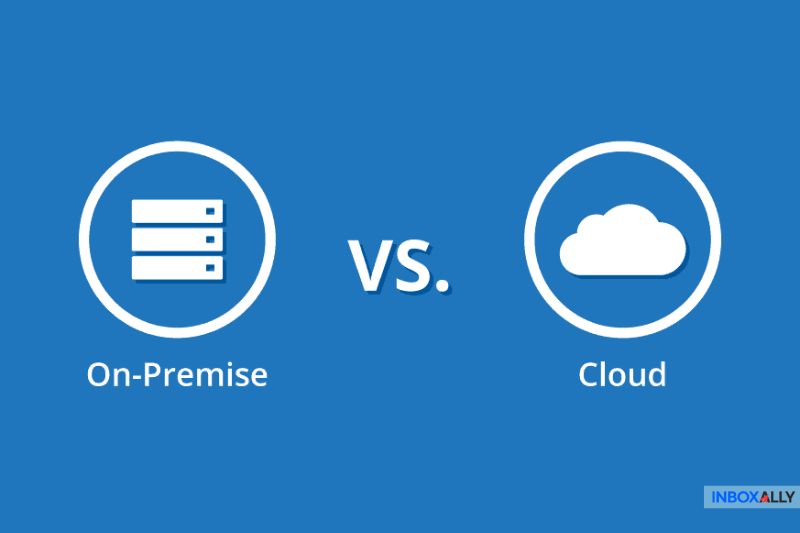
When it comes to spam gateways, you have two main options: on-premises and cloud-based. Both have their strengths and weaknesses, and your business needs will determine which is the better fit.
On-Premises Gateways
These are physical or virtual appliances installed directly in your network. You control everything—email traffic never leaves your servers. This may suit organizations that need direct control over filtering, data handling, and security policies, provided they have the resources to manage the system properly. You can modify filtering rules as needed and handle troubleshooting internally.
The downsides are high upfront costs and limited scalability. If your email volume suddenly spikes, you’ll need to buy more hardware to keep up.
Cloud-Based Gateways
Cloud-based gateways are made for easy scaling. Emails get filtered through remote data centers, which means you don’t have to manage hardware or infrastructure. It’s hands-off, so it frees up your IT team. But, you do give up some control. If your email volume surges, costs can add up, and you’ll need clear service-level agreements (SLAs) to ensure uptime and data protection.
So, which should you choose?
There’s no universal answer, but here’s some advice:
- If control and data privacy are top priorities, you might need on-premises.
- If scalability and easier management are more important, cloud-based could be a better option.
Ultimately, it comes down to balancing control, budget, and how much flexibility you need!
Final Thoughts

Technology evolves as quickly as cybercrime tactics do, so the key takeaway is this: email security isn’t something you can afford to overlook.
The real question isn’t whether your business needs a spam gateway but which one will keep you the most secure and adaptable. The stakes are high, but with the right tools, you can turn your inbox into a hub of productivity instead of a source of constant worry.
But keeping your inbox safe is one thing. Making sure your emails actually get delivered is another. That’s where InboxAlly can make a difference.
InboxAlly trains email providers to see your messages as trustworthy by improving sender reputation and boosting deliverability. If inbox placement is a struggle, make sure to check it out.