If you’re using Klaviyo, you probably didn’t expect email deliverability to become the hard part. You set up flows, connect your data, and watch revenue go up. Easy! But sometimes, emails that used to land reliably in the inbox start ending up elsewhere, usually without a big change on your part.
That’s what makes this so frustrating.
Behavior-based sending is powerful, but it also changes how volume and engagement are distributed over time. That’s why Klaviyo email deliverability issues tend to show up months later, once automations have stacked and sending has slowly expanded.
In this article, you will learn why that happens, where the pressure builds, and how to fix it without defaulting to copy tweaks, outdated rules, or checklist advice.
Key Takeaways
- Klaviyo spam issues usually come from engagement spreading unevenly as the email sending volume grows.
- Tactical fixes can help marginally, but they don’t hold if you keep mailing unresponsive segments. As long as volume expands into people who no longer engage, placement will keep degrading.
Klaviyo doesn’t ruin deliverability, but it changes the equation
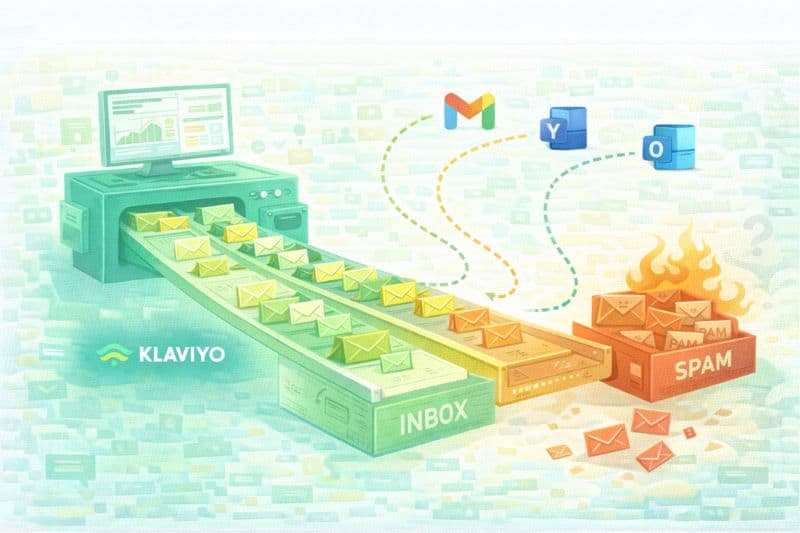
Klaviyo doesn’t decide whether your emails land in the inbox or the spam folder. Inbox providers do. What Klaviyo controls is who qualifies to receive an email, when it’s sent, and how messages branch based on behavior. Once the message leaves Klaviyo, filtering decisions sit entirely with Gmail, Yahoo, Outlook, and the rest.
That distinction is important because Klaviyo’s model changes how volume grows.
Regular email campaigns are straightforward. You choose a segment, send a campaign, and the sending is over. If you don’t schedule more campaigns, nothing else goes out. Because of that, many marketers assume that with Klaviyo total email volume stays roughly the same over time.
But behavior-based sending works differently. Flows keep running every day, new people qualify, and old ones often never fully fall out. Even if you never add another campaign, total sending keeps increasing as more people pass through the same automations.
This happens usually when the results look best. Everything from automations to revenue and other metrics shows healthy averages, and the system appears to be doing its job.
The issue is that inbox providers don’t look at intention or setup quality, but at outcomes. As behavior-based sending expands, more messages reach people who haven’t interacted in a long time. Engaged subscribers still respond, but are now a minority.
That’s why deliverability problems tend to emerge after things have been going well for a while, once flows have expanded, overlapped, and increased the amount of mail each inbox receives.
Sender reputation is a pattern
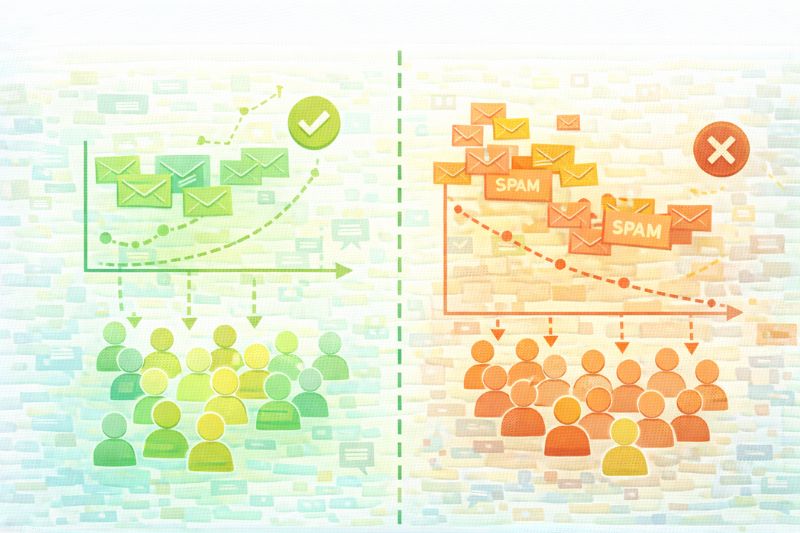
A common misconception is that sender reputation is a single number you can monitor and protect. That’s convenient, but it’s also misleading. Inbox providers don’t judge your sending based on an average, but based on how different groups of people respond when your emails arrive.
Imagine two brands sending the same campaign. Both report a 25% open rate and, at least on paper, look identical. In reality, their emails can land very differently. One brand gets most of its opens from people who regularly read, click, and buy. The other gets the same opens from a shrinking group that still engages, while the rest of the list does nothing.
The average hides that difference, but Inbox placement does not.
Engaged subscribers are powerful because they open quickly, click, and reply. Those actions help offset a lot of poor engagement from the rest of the list. But ironically, that also makes it easier to ignore what’s happening elsewhere. If a campaign looks good purely based on engagement metrics, most marketers take it at face value and call it a day.
That distribution, however, is exactly what email providers actively monitor when evaluating sending reputation and domain reputation. They see who opens, who doesn’t, and how often each group keeps receiving email marketing emails from the same sender email address. Over time, messages sent to unengaged subscribers start to outweigh the activity of the engaged few.
That’s why poor sender reputation often shows up when engagement drops across the board, but when it concentrates. This is also why list age and suppression timing matter far more than most marketers tend to recognize. We’ll come back to that.
Why Klaviyo flows accelerate spam placement faster than campaigns
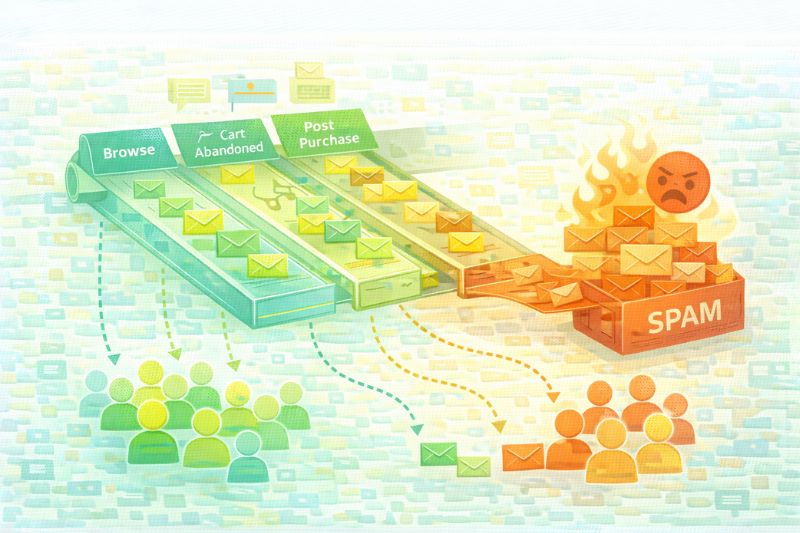
Automation flows can look deceptively safe because they don’t seem big. Each one sends a small number of emails to a narrow group, triggered by a specific action. Compared to a campaign blast, that seems much more controlled.
But as you add more automations, the same subscriber can qualify for several flows at once:
- Browse flow
- Abandoned cart
- Post-purchase
- Win-back
None of them is excessive on their own, but together, they raise how often the same recipient hears from you. This frequency increases without any calendar send changes.
Most flows are built once and left running, which is why an increase in email volume can be harder to spot over time. The qualification rules rarely expire unless you deliberately add an exit condition. If you’re not careful with how you set up flows, profiles that stopped opening months ago can still qualify for new steps, new branches, and new messages, simply because they triggered something once.
This is where the engagement decay we discussed earlier begins to show up in subtle ways. Inactive subscribers don’t just receive one more email. They receive many, spread across different automations, each reinforcing the same non-response history. Meanwhile, most engaged customers keep interacting and make the system look healthy at a glance.
From a reputation perspective, flows amplify uneven behavior. The responsive group stays responsive. The unresponsive group keeps accumulating deliveries without action. Because flows run continuously, that imbalance grows every day, not just on campaign days.
Put simply, campaigns are visible and easy to control. You can see when volume spikes and ease off on the sending. Flows are gradual and persistent. They change the math underneath your program, not the metrics you see on the surface.
If you want to see how this works directly in Klaviyo, check out this guide to learn how to connect Klaviyo to InboxAlly and monitor inbox placement behavior.
Volume and frequency: where good intentions go wrong
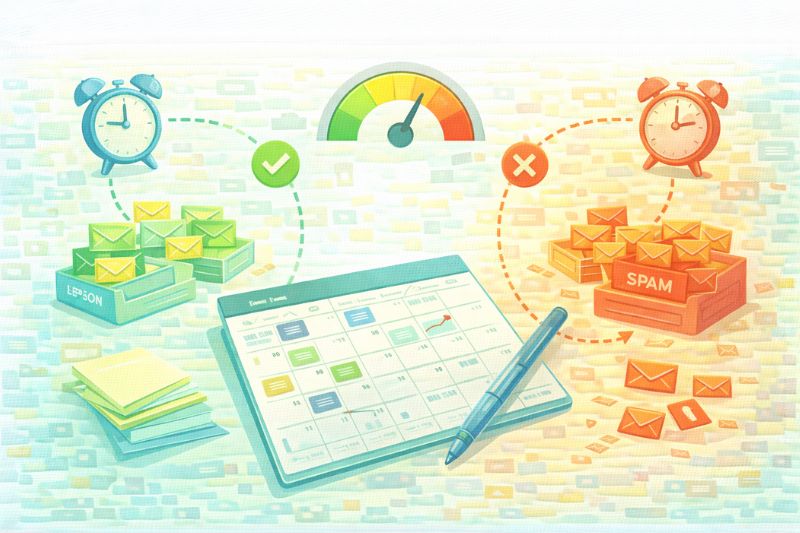
Rules like “one email per day per inbox” exist for a reason. They’re a rough proxy for tolerance. Past a certain point, attention drops and non-responses pile up quicker than engagement can offset it. The problem is that these rules were designed for campaign-heavy programs, where frequency is visible and intentional, which is not the case with automated flows.
Klaviyo makes it easy to exceed safe frequency without anyone noticing. Campaign calendars can look reasonable while flows keep sending emails in the background. None of those emails looks excessive on their own, but together, they add up to a level of exposure that no single rule catches.
This is where intent and outcome diverge. Teams want to stay present without being annoying, so to do that, they keep flows running and segments broad. The result is often the worst of both worlds:
- Unengaged profiles keep receiving mail far past their interest window
- The most engaged contacts sometimes hear from you less than they could without risk
Inbox providers respond to what actually happens, not what you meant to do. They see repeated delivery without response from one group and missed opportunities with another.
Schedules simply don’t fix frequency problems on their own. Sending fewer emails across the board just lowers volume, but it doesn’t change who can get mail. This is why deciding when someone should stop receiving mail is far more important than picking the perfect cadence.
What fixes Klaviyo spam problems long-term
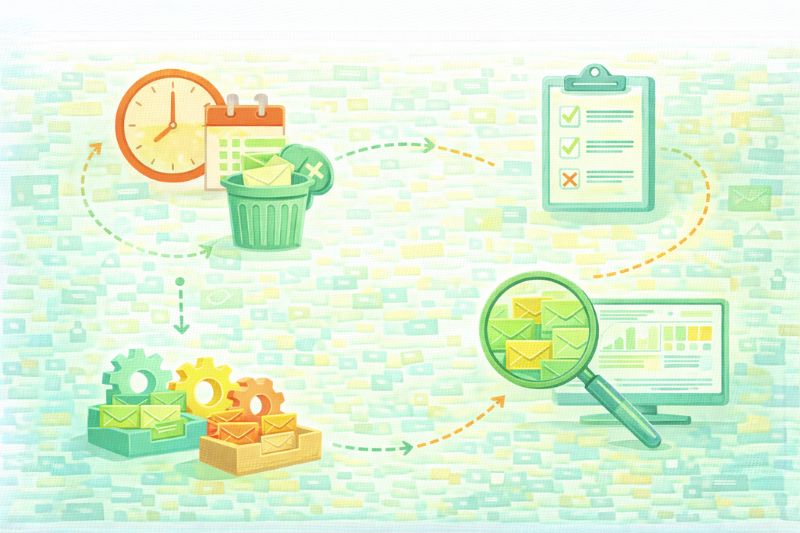
Now for the thing most of you have come here for: the changes that keep inbox placement intact as your Klaviyo program grows. There are four that will stay effective long term:
- Suppression with a timeline: Unengaged subscribers need to stop receiving mail after a defined period of inactivity, not after they’ve been ignored for a year. Timing is key here. The longer someone keeps getting emails without responding, the more history you build that works against you. Cutting that off earlier changes the trajectory of the entire program.
- Qualification over optimization: The next change is about eligibility. Instead of asking how to improve individual emails, ask who should still be receiving them at all. Tightening qualification rules forces decisions about relevance. Improving subject lines or send times doesn’t help if the same disengaged profiles continue to qualify for everything.
- Ongoing ownership of flows: Flows also need ongoing review. They’re often built when engagement looks clear and then left untouched while the audience changes around them. Entry rules that made sense months ago can continue adding people who no longer interact. Treating flows as systems means revisiting who can enter, when they exit, and how flows overlap, not just whether they are making you money.
- Monitoring placement: Finally, you need to look beyond opens. Opens are useful, but they flatten too much nuance. Placement tells you whether messages are reaching the primary inbox consistently or being diverted elsewhere. That’s where InboxAlly can help you see where emails land and adjust sending behavior before small issues harden into long-term problems. This is easier with a klaviyo email integration inbox placement rates setup that reflects real inbox behaviour.
None of this produces instant results, but it’s how email programs regain inbox placement and keep it stable as sending volume and automation increase.
Fix inbox placement with a consistent sending schedule
Most deliverability problems come from sending too much mail to people who stopped responding. Klaviyo makes scaling easy, but it also makes it easy to lose track of eligibility. Get suppression, qualification, and flow ownership right, and inbox placement will become predictable again.
Want to hand off deliverability to someone else? Try InboxAlly and see how your Klaviyo flows perform when inbox placement isn’t the bottleneck.