May 2026 brought a slow recalibration of what it means to deliver an email now that Gmail’s AI Inbox has been running long enough to leave fingerprints in the data.
A handful of practitioners are starting to put numbers and patterns to it, and they aren’t what most senders expected. There’s also a quieter story about how Gmail’s one-click unsubscribe is reshaping list churn, and an inbox placement ceiling that’s now formalized at 83 to 85 percent globally.
This article covers the more nuanced changes in May that didn’t make headlines this month, but probably should have.
Key takeaways
- Generic openers are now a deliverability liability. Gemini reads the first 100-200 characters to generate its summary.
- Gmail’s Manage Subscriptions tool is accelerating list churn at high-frequency programs.
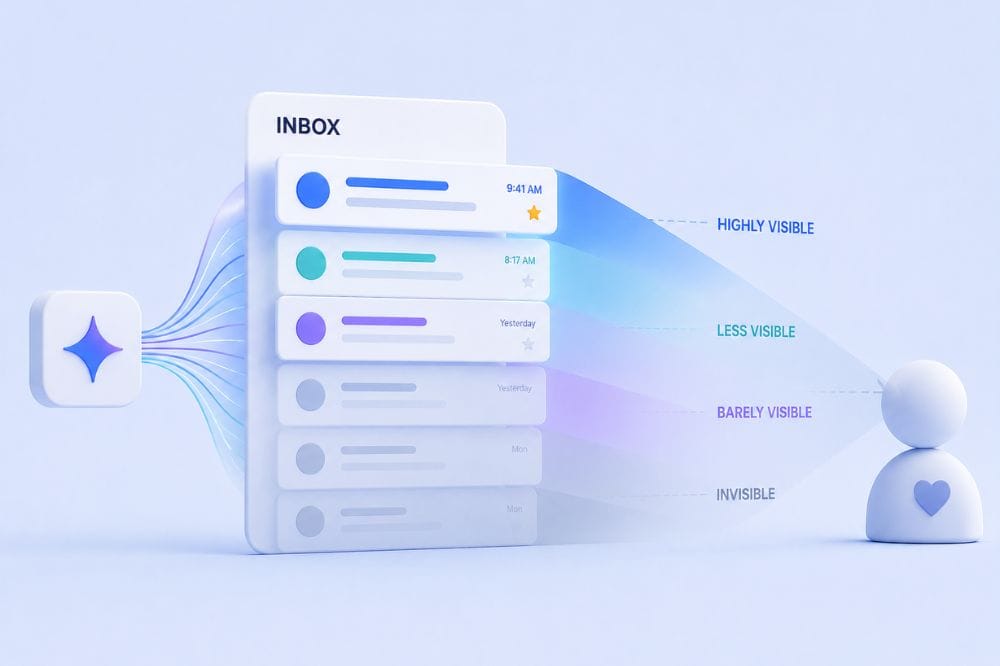
“Deliverability will have shades. It will no longer be pass/fail.”
That line came from Manu Cinca, founder of email consultancy Cohort Goose, in a May 8 MarTech article that explored what deliverability practitioners are seeing now that the AI Inbox has had time to settle in.
His full framing was even better:
You may make it into the inbox, but AI will determine how visible it is to the recipient. Gmail’s new AI Inbox means the differentiation between ‘deprioritized generic blast’ and ‘relevant, important message’ has never been higher stakes.
We’ve covered in prior months that the AI Inbox sorts by relevance rather than recency, and that messages can land in the inbox while being invisible. In May, practitioners are starting to quantify the spread between “in the inbox” and “read,” and it’s wide enough to matter to a P&L.
Marc Thomas, founder of Positive Human, took the more optimistic read in the same MarTech roundup. His view is that the AI Inbox punishes sloppy email and rewards relevant email, which more or less aligns with what good marketers have wanted for years. “It effectively surfaces good information, which is what you should have been sending the whole time,” Thomas said, “and relegates poor information or purely promotional information to more of a ‘potluck.‘”
Fair argument. But the execution will probably be a point where most programs struggle, because Gemini doesn’t define “relevant” the way a marketer does.
System tricking has already started
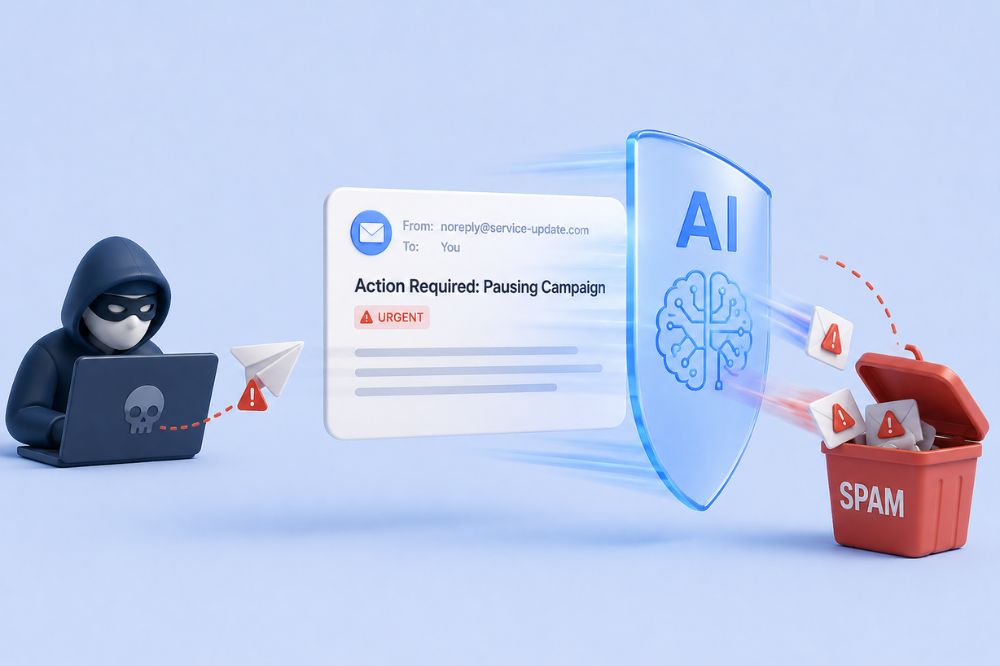
Some of what’s happening in the wild is uglier.
Manu Kustner, a deliverability consultant cited in the same article, described receiving a cold email subject-lined “Action Required: Pausing Campaign” from a sender mimicking the format of urgent transactional mail to trick the AI’s signal-detection.
His warning was direct: “You may land high in an inbox once with a trick like that, but it’s a fast track to the spam folder and is not a sustainable tactic.”
Expect a wave of it anyway. Whenever a new ranking system lands, part of the market games it before providers patch the loophole. Gmail will catch up. It always does.
The placement ceiling
A research summary published May 11 put the 2026 global inbox placement rate at 83 to 85 percent. Roughly one in six emails still never reaches the primary inbox, even after this year’s authentication wave has fully settled.
That number isn’t a regression, but it does formalize what the industry has already been accepting:
- The placement is going down
- The difference between delivered and read emails is closer to 15 percent than to zero.
Senders running on ESP delivery dashboards as their primary instrument are flying with the wrong gauge. Server acceptance and inbox placement are different metrics, and the second is directly tied to revenue.
What Gemini reads when it ranks your email
This is the most practical finding to come out of the past few months, and it deserves more airtime than it’s gotten.
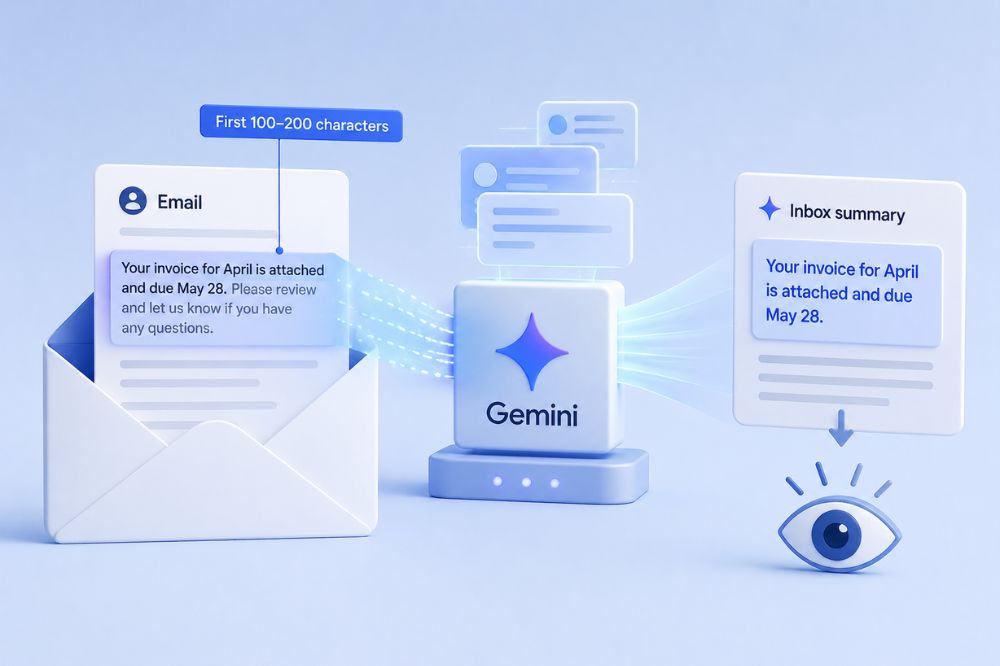
Gemini generates its inbox summary by reading the first 100 to 200 characters of the email body. That preview shapes how the message is presented, and by extension, whether the recipient bothers to open it. Front-load the value, or let the model decide what mattered.
Openers that hand control to the algorithm:
- “Hope this email finds you well.”
- “We’re excited to announce…”
- “Thanks so much for being part of our community.”
What works better is the same advice good copywriters have given for years, except now as a deliverability input. Lead with the specific thing: the number, the deadline, the change. If Gemini’s summary previews “Your invoice for April is attached and due May 28,” that gets read. If it previews “We hope this email finds you well as we move into a new season,” that gets demoted.
Every campaign you send between now and the end of the year is being read by an algorithm before it reaches a person. The first sentence is not just for show anymore.
The unsubscribe story nobody’s talking about loud enough
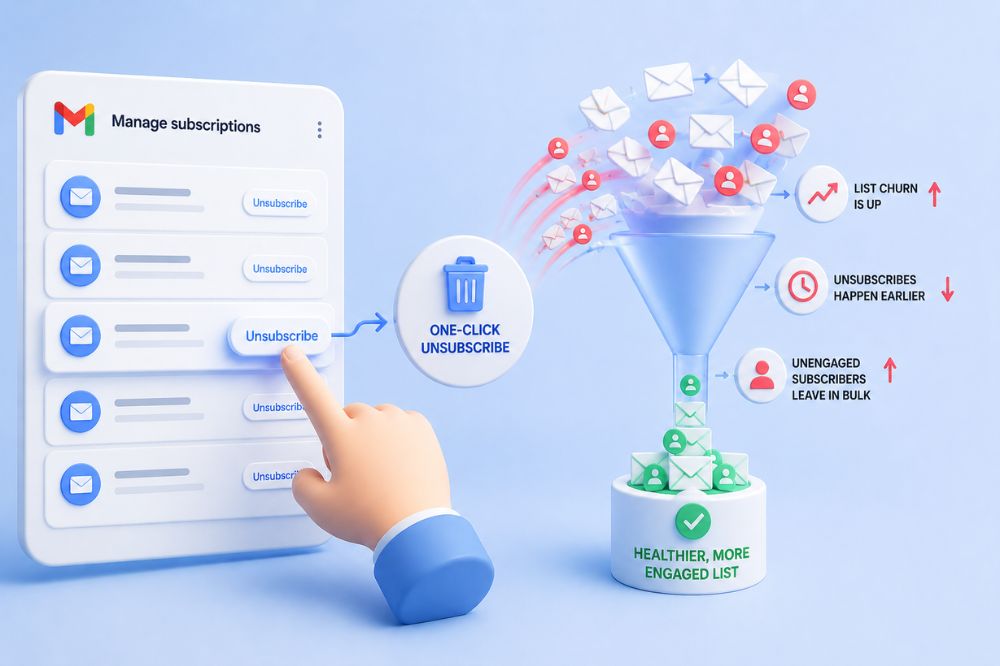
Gmail’s Manage Subscriptions tool, rolled out alongside the broader Gemini features earlier this year, has had several months to influence list dynamics. It gives users a one-click view of high-frequency senders and a one-click unsubscribe.
A January analysis from Attentive noted that this single feature is doing more to shift marketer behavior than any single technical requirement, because it drops unsubscribe friction to roughly zero for the senders users feel most fatigued by.
Three patterns worth watching in your own program:
- List churn is up in high-frequency, low-value programs. Daily senders without obvious differentiation are getting bigger unsubscribe numbers than this time last year.
- Unsubscribes are happening earlier in the lifecycle. Subscribers who would have ignored you for six months are leaving in the initial weeks.
- “Real but unengaged” subscribers are leaving in bulk. They never opened, never complained, and now they’re gone.
A list that sheds disengaged subscribers is, technically, a healthier list.
What to do this month
A practical short list:
- Audit the first 150 characters of your last ten campaigns. If they don’t communicate actual value or specific change, rewrite them.
- Pull your unsubscribe data segmented by tenure. Spikes in the first 30 days mean acquisition and onboarding are out of sync.
- Stop treating “delivered” as the success metric. Inbox placement testing belongs in your monthly cadence.
- Build engagement signals deliberately. Tools like InboxAlly generate the opens, scrolls, replies, and inbox rescues that mailbox providers use to score reputation, which holds placement steady while the rest of your program adjusts.
What’s next?
The inbox is becoming less chronological and more interpretive. That means “delivered” matters less than whether providers believe recipients value your mail. InboxAlly helps reinforce those trust signals while your broader email program adapts to the new rules. Book a free demo and measure what changes beyond simple delivery rates.