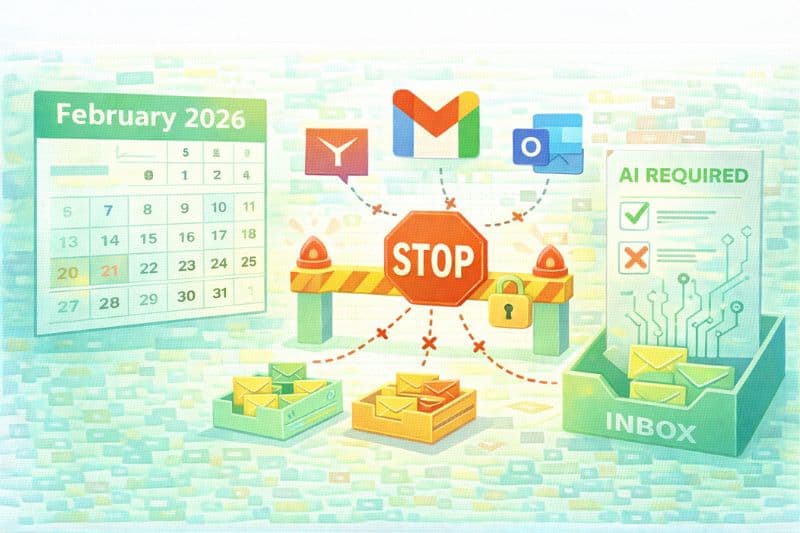
February 2026 represents what industry analysts are calling the “hard cutoff,” which marks the point where major mailbox providers stopped warning and started blocking at scale.
Following January’s initial rollout, the enforcement window has closed. Google, Yahoo, and Microsoft have moved from publishing requirements to rejecting mail that doesn’t meet them, creating a binary outcome: authenticate correctly or get bounced before reaching the inbox.
None of the major providers has explained the exact logic behind the AI-driven placement decisions introduced this month, but data from dozens of email service providers shows that getting “delivered” no longer guarantees your subscribers will see the message.
Key takeaways
- Spam complaint rates above 0.3% trigger automatic delivery holds lasting up to two weeks.
- AI summarization tools are suppressing up to 40% of delivered emails into “Low-Value” digests.
- DMARC alignment is now mandatory. The domain in your From header must match the domain authenticated by your email infrastructure.
Microsoft starts rejecting mail at the server level
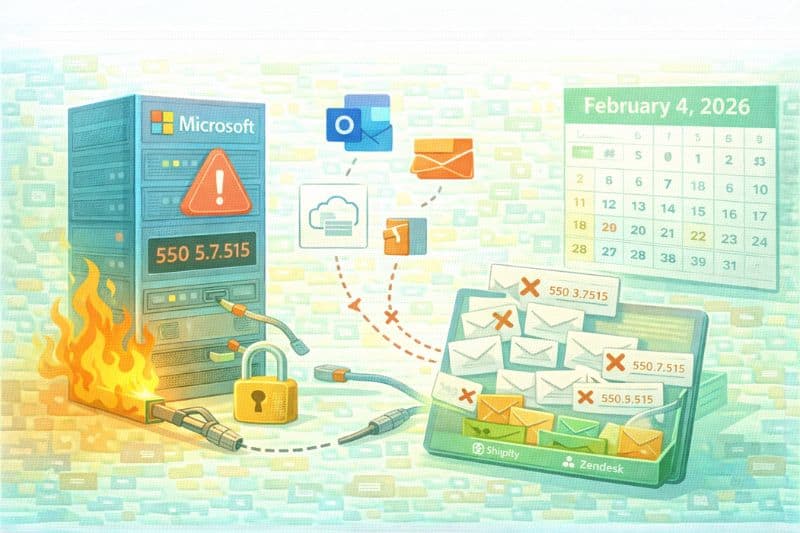
As of February 4, 2026, Microsoft fully deployed its Phase 3 enforcement for Outlook, Hotmail, and Microsoft 365. The shift represents a fundamental change in how unauthenticated mail is handled.
Unlike previous years, where emails failing authentication might land in spam, Microsoft now sends permanent 550 5.7.515 bounce errors for any sender sending more than 5,000 emails daily without proper DMARC authentication.
The policy has caused widespread disruption. Companies using third-party platforms like Shopify or Zendesk saw bounce rates jump 22% in early February, mostly because their Return-Path domains don’t match the From addresses visible to recipients.
Infrastructure outages briefly affected IMAP sync across several providers during the rollout, showing how brittle the infrastructure becomes when security protocols get applied universally and all at once.
Spam complaints above 0.3% now trigger instant consequences
While keeping spam complaint rates below 0.1% has been standard advice for years, February 2026 data shows that crossing the 0.3% threshold now triggers immediate consequences.
Google and Yahoo are using 0.3% as a hard cut-off point. Reports from multiple senders indicate that reaching this threshold three days in a row results in temporary delivery holds or what the industry is calling “shadow bans” lasting up to two weeks. Google Postmaster Tools now classifies these domains as high-risk, which leads to automatic blocking in their systems.
AI becomes the invisible filter
The biggest technical change this month is how AI agents now function as the “front office” for human inboxes.
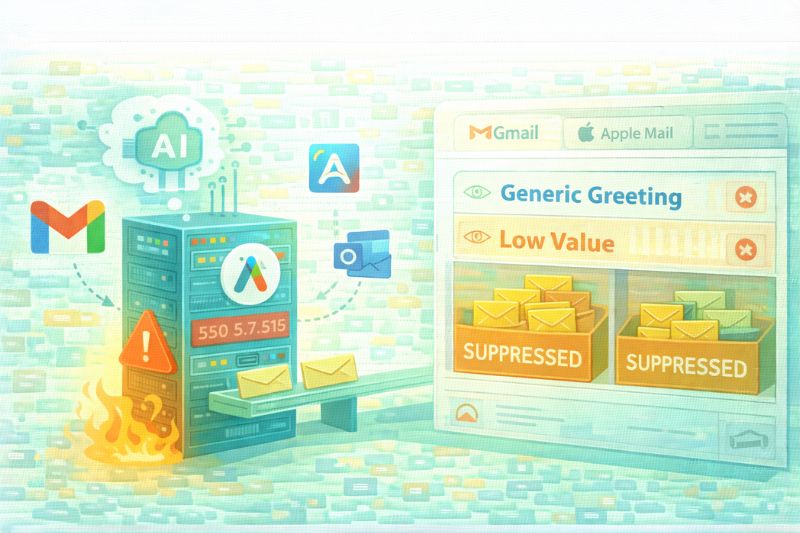
Gmail’s Gemini AI and Apple Mail’s built-in summarization tools have changed what “inbox placement” means. Recent Folderly data shows roughly 40% of messages that technically reach inboxes get suppressed or grouped into “Low-Value” summaries. They don’t bounce or generate spam complaints, but subscribers never lay eyes on them.
Google’s AI looks at the first 100-200 characters of your message body when generating summary text. Brands wasting that space on generic greetings like “Hope you’re doing well” often have their emails get summarized as “Generic Greeting” instead of the actual offer, which tanks engagement across the board.
Heavy image use is now considered a deliverability risk. When AI can’t pull readable text from your message, it labels emails as “Potential Spam” or “Low Value,” creating what we could consider a new category of delivered but completely ignored emails.
DMARC alignment becomes non-negotiable
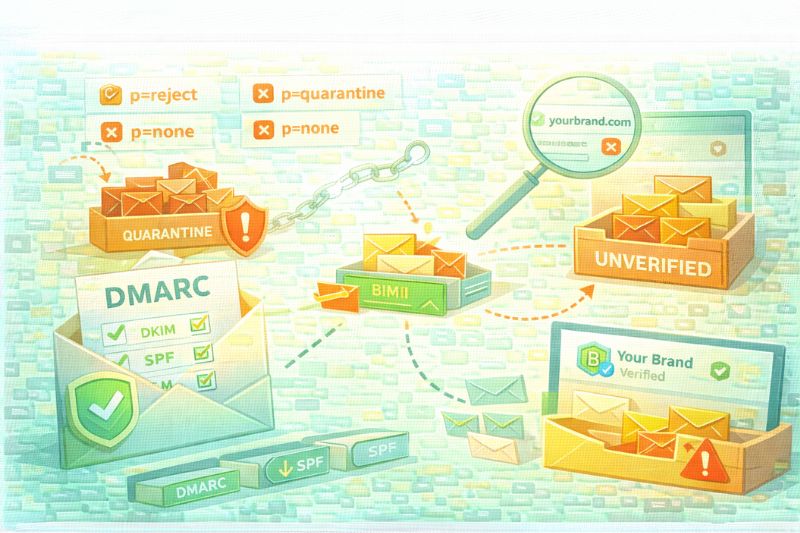
Industry reports from early February show 87% of successfully delivered bulk mail now carries a p=quarantine or p=reject DMARC policy. The old p=none monitoring-only approach is being treated by Microsoft 365 as “effectively unauthenticated.”
The “10-DNS-lookup limit” for SPF has become a real problem. As companies add more third-party tools to their sending workflow, many run into this cap, resulting in PermError bounces. SPF flattening tool adoption has surged in signups during early 2026 as businesses hunt for workarounds.
Similarly, brand Indicators for Message Identification (BIMI) has moved from luxury to necessity. With AI-generated phishing attempts getting more sophisticated, displaying a verified logo next to your From name has become one of the few trust signals that still works. New automated Verified Mark Certificate services launched this month to help smaller companies get BIMI working, since the blue checkmark makes a measurable difference in whether people open messages.
Apple Mail added BIMI support in February 2026, extending verified brand indicators beyond just the top tier of enterprise senders.
One-click unsubscribe enforcement tightens
RFC 8058 compliance is now mandatory. Major providers are strictly checking for the List-Unsubscribe-Post: List-Unsubscribe=One-Click header, not just an unsubscribe link in the footer.
Emails missing this specific technical header are experiencing immediate 15-20% drops in inbox placement this month. The unsubscribe system has to process requests within 48 hours now, down from the 5-7 day window that used to be standard across the industry.
Many marketing teams are questioning whether their existing email templates (some built years ago) can even support the new technical demands. The uncertainty has left campaigns sitting unfinished as drafts instead of going out to subscribers.
When inbox placement drops, engagement usually falls with it. InboxAlly uses seed emails to re-establish positive signals with inbox providers. Book a demo to see what it can do for your email setup.
Regional data sovereignty requirements expand
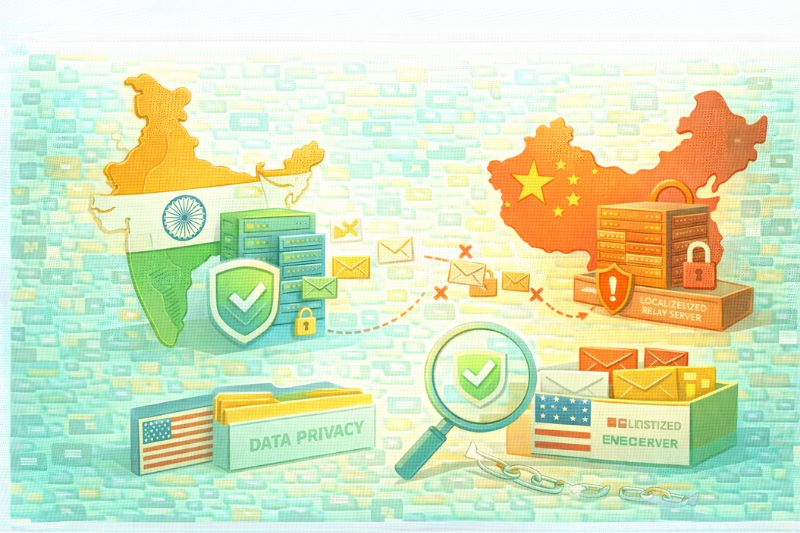
India’s Digital Bharat Framework got updated this month with new requirements for email service providers to prove where subscriber data is stored. Senders targeting Indian subscribers are watching deliverability drop if their ESPs can’t verify that subscriber information gets handled according to the 2026 local rules.
In addition, China’s updated cybersecurity laws that took effect in February 2026 have made sending emails across borders significantly harder. Senders are reporting high delays and greylisting (temporary blocks) unless they route through Chinese-localized relay servers.
Updated consumer privacy rules in India and parts of the US now treat subscriber inactivity beyond 12 months as automatic withdrawal of permission. Sending to these dormant accounts is both legally risky and a leading cause of domains getting blacklisted this month, according to anti-spam monitoring organizations.
Technical protocol updates
TLS 1.3 becomes the standard: While Transport Layer Security has been required, February news indicates emails sent via TLS 1.2 or lower are receiving “neutral” trust scores, while TLS 1.3 provides reputation boosts. Google and Microsoft are beginning to flag older TLS versions as “Potentially Insecure” in user interfaces with red padlock icons, destroying click-through rates.
RFC 5322 compliance strictly enforced: Google has tightened checks on Internet Message Format standards. Emails containing duplicate headers (two Date or Subject headers, which are usually bugs in cheap automation tools) are now auto-rejected at the SMTP level rather than corrected by providers.
What February’s changes mean for email programs
February 2026 benchmarks now define clear, safe, and danger zones based on data gathered by multiple deliverability monitoring services:
- Spam complaint rate: Under 0.1% is safe; above 0.3% triggers immediate blocking
- Bounce rate: Under 2% is fine; over 5% causes domain throttling
- SPF lookups: Must stay under 10; 11+ results in PermError and auto-fail
- DMARC policy: p=quarantine or p=reject required; p=none treated as unverified
So while “content is king” may have made more sense before, “infrastructure is king” now feels like sounder advice, considering that even the best email copy means nothing when DMARC alignment or the TLS version is wrong
With enforcement now consistent across all major providers and AI agents being used more widely, there’s little room for mistakes. Senders need to treat authentication, list hygiene, and technical compliance as core infrastructure, not optional practices they can get around to eventually.
Most tools diagnose deliverability problems; few address reputation directly. InboxAlly reinforces sender reputation by generating real engagement from seed inboxes that mailbox providers interpret as positive user signals. Learn how it works.