For any business that lives by email marketing, landing on a blacklist is like a mini heart attack in the middle of the workday. Suddenly, all those emails you carefully crafted could be skipping the inbox and heading straight to spam. That means engagement, sales, and maybe even your customer relationships are slipping through your fingers! They say, “Out of sight is out of mind,” and if your customers aren’t seeing your emails, how long before they forget about you altogether?
But not all blacklists are created equal. So should you worry about every single one? Is it worth paying for removal, or could that money be better spent elsewhere? And, most importantly, how can you keep your emails reaching the inbox without sweating over every blacklist out there?
Today, we’re diving into these questions and more. So, if you’re ready to take control of your deliverability and keep your emails where they belong, keep reading!
What Is the UCEPROTECTL3 Blacklist?
Imagine the UCEPROTECTL3 blacklist as a type of “neighborhood watch,”—but instead of keeping an eye on individual troublemakers, it’s watching entire blocks of IP addresses.
Unlike most blacklists, which monitor specific IPs for spam activity, UCEPROTECTL3 takes things a step further. It flags whole ranges of IP addresses based on the reputation of their internet service provider (ISP) or hosting provider.
So, even if your business is completely innocent of spam, your emails could still be blocked simply because you’re “sharing the same street” as less reputable senders. Unnecessary? Probably.
It’s worth mentioning that UCEPROTECT breaks its blacklist into three levels, with UCEPROTECT3 being the third level which covers the broadest scope. Here’s what those levels are:
- UCEPROTECTL1: Keeps track of individual IP addresses known for spam.
- UCEPROTECTL2: Flags multiple IPs from internet service providers with high levels of suspicious email traffic.
- UCEPROTECTL3: Covers entire IP ranges, blocking all users associated with the same internet service provider known for spam.
This is why, by blacklisting at the ISP level, UCEPROTECTL3 often sweeps up legitimate senders who happen to share a provider with high-volume spammers. So, if you’re using a shared host, you could find yourself listed—through no fault of your own.
How UCEPROTECTL3 Impacts Email Deliverability
In some cases, the UCEPROTECT Level 3 (L3) blacklist can pose an issue for email deliverability, particularly for businesses that rely on reaching inboxes across a mix of lesser-known email providers.
When your IP lands on this list, your emails may bypass the inbox entirely and end up in the spam folder, resulting in fewer eyes on your messages. For businesses unlucky enough to share IP space with spammers and have an audience that uses more niche ESPs, this deliverability hit can feel like a penalty for someone else’s bad behavior.
But what about UCEPROTECTL3’s influence on the major players? Luckily, most well-known email service providers (ESPs)—Google, Microsoft, and others—don’t rely on blocklists like this one. Instead, they focus on metrics like how users engage with your emails. However, smaller email providers and niche networks might indeed have UCEPROTECTL3 in their spam filter detection.
So, while following best email practices and maintaining a strong sender reputation should, in theory, go a long way, this blacklist challenges convention—it’s more like things are out of your control. And, well… they kind of are.
How to Check if UCEPROTECTL3 Blacklisted Your IP
Fortunately, there are simple steps you can take to find out if your IP or domain has been caught in the wide net of UCEPROTECTL3. Using online blacklist-checking tools like MX Lookup, you can quickly see if your IP has been flagged. Here’s a quick guide to checking your status:
- Connect your email domain to a blacklist-checking tool – Many online tools, including MX Lookup, are built to scan major blacklists and report any listings, even on multiple domains.
- Run the MX Lookup feature – Once connected, use MX Lookup’s feature to check if your IP address or domain is listed on UCEPROTECTL3 or other blacklists.
- Monitor your sender reputation regularly – Keep tabs on your sender reputation over time. Regular checks can help you catch any red flags early so you can take action before they become issues.
It’s a good idea to keep an eye on your domain and check for any blacklists it might end up on. UCEPROTECTL3 might not be a huge concern, but landing on a major blacklist like Spamhaus will definitely impact your deliverability. Stay sharp!
Now, if deliverability is a big concern for you, InboxAlly can help you strengthen your sender reputation with consistent, positive engagement. By opening and interacting with emails across its network, InboxAlly sends positive signals to major inbox providers, giving your deliverability a solid boost.
With their warm-up features, you can maintain a solid reputation without relying on quick-fix removal tools, which only lead to inevitable re-listing.
Interested in learning more? Go here and give InboxAlly a try!
How to Get Delisted from the UCEPROTECTL3 Blacklist
If your IP address has found its way onto the UCEPROTECTL3 blacklist, there are two main ways to get off it: waiting for automatic delisting or opting for a paid removal. Here’s how each works:
- Automatic Delisting – UCEPROTECTL3 will automatically remove single IP addresses if they maintain a clean record for seven days—they don’t send unsolicited bulk emails or get any spam complaints during that time. However, this option requires some patience and trust that no further issues will trigger blacklisting again.
- Paid Removal – UCEPROTECT offers a quicker option through a “donation” for instant delisting which can be tempting to businesses in blacklist-related panic. However, this is highly controversial as it doesn’t guarantee you won’t be relisted. Avoid paying for removal from any blacklist, including this one!
Even if you end up on UCEPROTECTL3, your deliverability will likely remain unaffected. Given the organization’s lack of transparency around why or how you were blacklisted, waiting it out is often the best approach.
The UCEPROTECTL Controversy
The UCEPROTECTL blacklist has raised some eyebrows in the email world. One big concern? The pay-to-remove option, where businesses can “donate” for a quicker delisting. Sure, it’s convenient, but it does beg the question: are UCEPROTECTL’s priorities more about profit than protection?
Then there’s the issue of blacklisting entire IP ranges. This wide-net approach often pulls in innocent users who just happen to share an internet provider with spammers, stirring up debates around fairness. Is lumping everyone together overkill? Absolutely.
Another sticking point is UCEPROTECT’s transparency problem. Their system relies on something called a “SPAMSCORE” to block entire networks (or ASNs) from specific providers—but what actually goes into that score? They don’t say.
In fact, their disclaimer bluntly states they “reserve the right not to be responsible for the topicality, correctness, completeness or quality of the information provided.” In other words, UCEPROTECT might flag you as a spammer without much explanation, and they won’t be held accountable if the listing is inaccurate.
Focusing on Deliverability Over Blacklist Anxiety
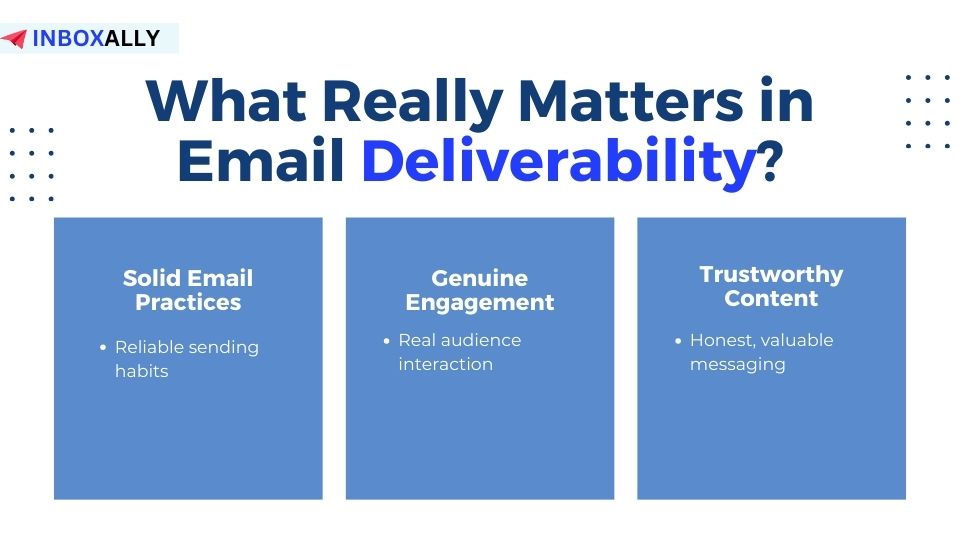
While blacklists like UCEPROTECTL3 can be intimidating, plenty of email experts agree: obsessing over them often does more harm than good. Instead of constantly checking your blacklist status, it’s usually far more productive to put that energy into improving deliverability with solid email practices and genuine engagement.
Deliverability success depends on factors that reflect well on your sender reputation—high engagement rates, low bounce rates, and honest, trustworthy content. Keeping a good reputation also means covering the technical bases: consistent email authentication (SPF, DKIM, and DMARC), stable sending volumes, and keeping clear of spam traps—all important signals providers check to gauge your credibility.
With tools like InboxAlly, deliverability features work behind the scenes to engage with your emails across a network of inboxes, sending all the right signals to major providers and reinforcing your legitimacy. By helping your emails land in the right places, InboxAlly reduces the impact of smaller blacklists and boosts campaign performance overall.
So, rather than sweating every blacklist out there, a proactive approach to engagement and deliverability can be your best bet for reaching your audience reliably.
Final Thoughts

If you’re an email marketer who’s landed on the UCEPROTECTL3 blacklist, it’s totally normal to feel a bit rattled. But here’s the thing—it might not be quite as disastrous as it seems. UCEPROTECTL3, while annoying, isn’t always the main reason your emails aren’t getting through. Often, the real solution is in the little adjustments that make all the difference.
For that extra edge in deliverability, InboxAlly can make a huge difference. By actively engaging with your emails across a network of inboxes, InboxAlly sends positive signals to email providers, improving your poor sender reputation. This helps keep your emails out of spam folders and right where they’re meant to be—front and center in your customers’ inboxes.
With regular warm-ups and monitoring, InboxAlly provides that reputation boost that many marketers are looking for. Make sure you give it a try!
Here’s to a little more peace of mind, fewer blacklist worries, and emails that land exactly where they belong. Good luck, and may your messages always hit the inbox!