
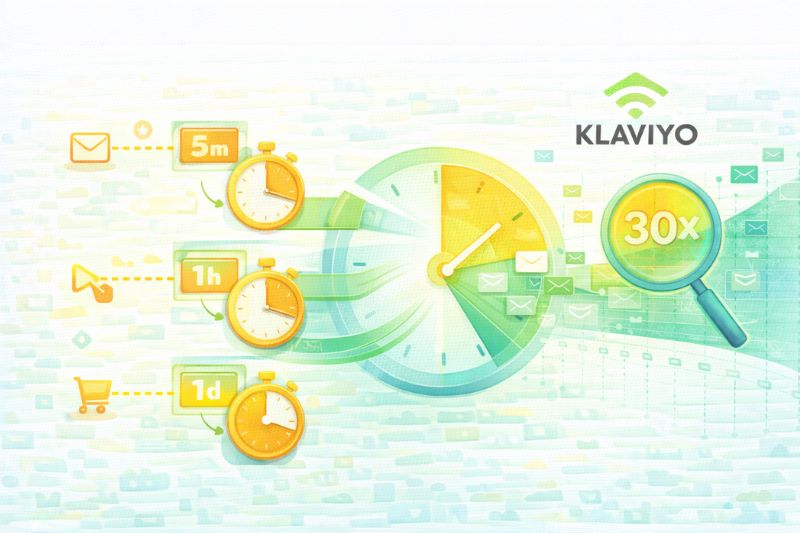
Email programs that respond to customer behavior can generate up to 30× more revenue per recipient than one-off campaigns. That’s not a negligible difference. It reflects a fundamentally different way email works when timing and intent are wired into the system.
So when email is no longer something you plan and send, but something that reacts automatically, what are you actually managing? Is it still a channel? Or is it a set of rules that determine who hears from you, how often, and in what order?
Klaviyo’s power in email marketing is based on this kind of automation, and it’s also the reason many marketers get confused as small logic choices start compounding.
To clear up the confusion, this article explains:
- What Klaviyo is fundamentally built to do
- How segmentation and automated flows add up once behavior drives sending
- Why Klaviyo’s analytics feel reassuring, and where they leave out important context
- How automation density, volume, and engagement distribution affect inbox placement over time
If you’re considering Klaviyo or just getting started with email marketing, this will help you understand what you’re signing up for and whether going for a tool like this is a wise choice.
Key takeaway
- Klaviyo is a powerful email marketing platform that delivers the most value when email runs as an always-on system driven by automation.
- Its advantage compounds only when segmentation, timing, and sending volume are actively managed as the program grows.
Email automation that starts with customer behavior

Unlike a lot of other email marketing platforms, Klaviyo treats subscribers based on ongoing behavior (product views, cart activity, purchases, etc.) Demographic fields still exist, but they don’t impact decision-making on their own. It’s more important what customers do than who they are on paper.
This fundamentally changes how email is handled. Instead of deciding who should receive a campaign, you decide what should happen when someone takes a specific action within a certain window of time. This timing is part of the logic based on activity, purchase frequency, and a few other factors. Two customers with similar profiles can behave very differently, and Klaviyo will respond to that accordingly.
That’s why Klaviyo works especially well for ecommerce. Purchase controls which flows someone enters, what content they see, and how often they hear from you. These decisions happen continuously without manual list rebuilding.
The data Klaviyo collects changes the email strategy day to day:
- On-site behavior is used to decide when someone should receive a message
- Time-based rules control pacing and eligibility
- Order value and purchase frequency control how customers are treated
- Engagement via email and SMS marketing is used to adjust future campaigns.
The upside is relevance that improves over time, but it comes at the cost of complexity. More customer data creates more possible paths, and more paths usually mean more automation. That’s okay early on, but it requires more care as the program grows.
Automated workflows in Klaviyo
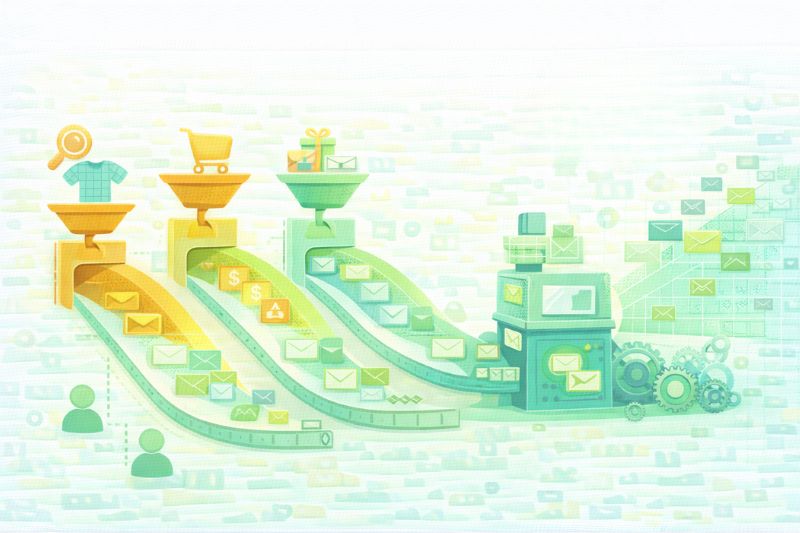
Most of Klaviyo’s good reputation comes from its automated flows. These aren’t one-off tactics meant to create quick wins, but rather ongoing systems. When a flow is live, it keeps running in the background, responding to customer behavior whether or not you’re actively working on an email that day.
This is why flows outperform targeted email campaigns in the long run. Campaigns depend on timing, attention, and manual effort. Flows don’t. They respond the moment something happens, using context that’s hard to replicate in a one-off send. A welcome series runs every day for new subscribers. Abandoned cart emails go out while purchase intent is still fresh. You don’t have to remember to send them – the system does it for you.
But as you track more customer actions, more triggers get added. For example, when someone browses a product, they enter one flow. When they add it to the cart, they enter another. When they complete a purchase, a new sequence starts. If they return after a while, you get yet another flow. Each one makes things more complicated, and all of it can happen within a few days or even within hours.
As automation takes over more sending, inbox placement becomes harder to manage by hand. InboxAlly focuses on reinforcing the right sending patterns and engagement signals, so your flows can keep doing their job. Run InboxAlly with your setup and see what changes when more emails land in the inbox.
Klaviyo SMS: powerful but unforgiving
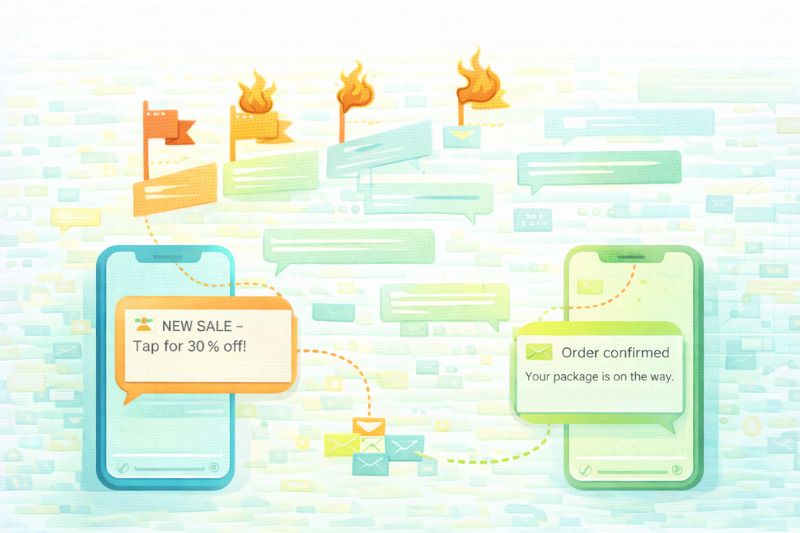
Klaviyo’s SMS integration is appealing for a simple reason: it runs on the same data as your email. The same events, segments, and timing rules apply, which means you can add SMS to existing flows without building a separate system. That’s most efficient in ecommerce business flow since you get one place to view customer behavior and manage decisions.
But, there’s also a small problem with that: SMS messages behave nothing like email.
Email is forgiving because people can open it later or ignore it without much consequence. SMS is instant and requires immediate attention, which drastically changes expectations. Timing has to be precise, and the message has to make sense immediately. When it doesn’t, the reaction is quick and often negative.
Because SMS is configured alongside email, it’s tempting to reuse the same logic. If an email makes sense here, an SMS probably does too, right? In practice, that logic doesn’t hold well.
SMS works best in a narrow set of cases:
- Time-sensitive messages tied to clear intent
- Transactional updates or confirmations
- High-confidence follow-ups where the action is obvious
It backfires just as quickly when:
- Promotional messages are sent too often
- Messages are triggered by weak or indirect behavior
- Flows don’t account for recent SMS exposure
The problem isn’t the channel itself but rather how you manage it. SMS magnifies whatever segmentation and flow logic you already have, and SMS is valuable only if that logic is tight.
Analytics, attribution, and the illusion of certainty
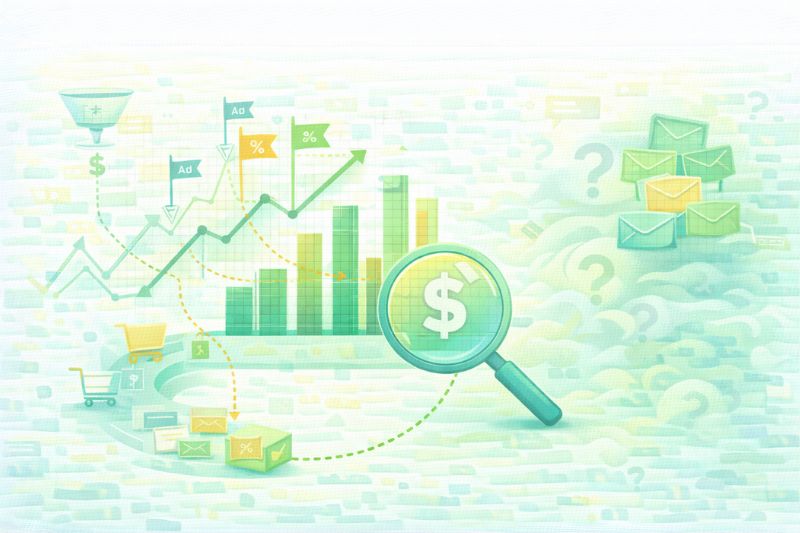
Another of Klaviyo’s strong selling points is its analytics, and for good reason. It’s very good at answering specific questions about purchases, revenue, and how individual flows perform, and that level of precision is genuinely useful for day-to-day optimization.
One thing to keep in mind, though, is that Klaviyo measures extremely well what happens inside Klaviyo, which makes it easy to double down on what looks like it’s working, especially when automation starts outperforming targeted campaigns on paper.
But once other channels come in, the picture changes. Paid advertising, onsite promotions, organic traffic, and repeat buying behavior influence these metrics as well, but Klaviyo can only attribute what it directly works with so when a customer converts after multiple exposures, the last message often gets more credit than it deserves.
Two things tend to follow from this:
- Automation looks more effective on its own than it really is
- Sending volume increases because the numbers keep justifying it
That doesn’t mean the data is wrong, but it does mean that it’s limited to a specific view. Klaviyo won’t warn you when automation is being over-credited or when rising revenue per recipient is masking changes in engagement quality.
This is why analytics can feel reassuring right up until they don’t. Performance usually looks best just before responsiveness starts to change, so don’t treat good numbers as a reason to stop paying attention.
For a technical overview of how Klaviyo connects to external sending tools, check out our Klaviyo + InboxAlly integration guide.
Email deliverability at scale
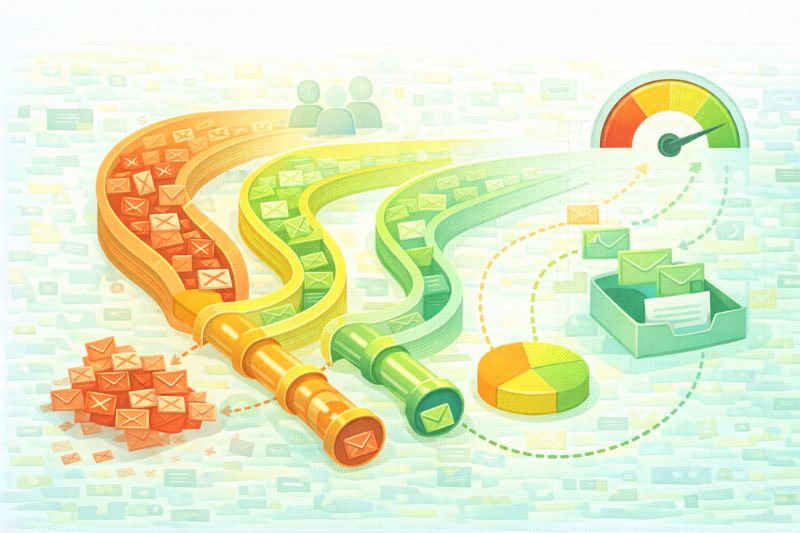
As your email program matures, it often brings changes to deliverability. With more emails and now an older list, engagement tends to spread out to different groups. This doesn’t mean that anything is broken, but the results can start to disappoint. When more emails reach people who haven’t interacted in a while, your most engaged subscribers make up a smaller share of overall volume, which can create inboxing issues.
Klaviyo doesn’t cause this, but it also doesn’t prevent it.
What Klaviyo controls is who qualifies, when emails go out, and how automations branch based on behavior. What it doesn’t control is how mailbox providers react once volume, frequency, and engagement change. That part is still your responsibility.
To understand what’s happening, it helps to focus on three factors:
- Volume: Automation scales because sending is spread across many flows instead of a few large campaigns.
- Frequency: Overlapping segments and flows can increase how often some people hear from you.
- Engagement distribution: a small, highly active group carries results, while less active segments receive more mail
As long as engagement is concentrated in the right places, things will be fine. When volume expands into less responsive segments, placement can change without a clear before-and-after moment.
So, when it comes to email deliverability, Klaviyo doesn’t hold your hand. It gives you the tools to build complex systems, but it doesn’t stop you from sending too much.
At that point, adding a tool focused purely on proper inbox placement can make a lot of sense. InboxAlly works by reinforcing engagement patterns that mailbox providers already trust, giving your existing automation a more stable delivery baseline. If results have started to become underwhelming, book a free demo and see whether deliverability is part of the issue.
Automation capabilities don’t manage themselves
In many ways, Klaviyo has changed what “running email” means. You’re no longer managing one-off sends. Instead, you’re building a system that keeps making decisions even when you’re not looking.
That’s why discipline goes a long way. With good segmentation, intentional automation, and realistic expectations around data and deliverability, Klaviyo scales really well.
But remember: the platform can only do so much. The way you manage the system sets the whole direction.