
Nobody likes seeing people leave, especially when they leave your email list. That little number, your unsubscribe rate, has a way of catching your eye after every send. It makes you wonder if you did something wrong, then start questioning the subject line, the send time, and even the whole campaign.
But unsubscribes aren’t necessarily a bad thing. They’re part of very valuable feedback to your timing, content, or expectations, and when you know how to read them, you start seeing opportunities instead of problems.
In the next sections, we’ll get practical: what “good” actually means for different send types and audiences, why people leave, and the changes that lower churn without chasing the fantasy of zero.
Key takeaways
- You can calculate unsubscribe rates by dividing the number of people who opt out by the total number of delivered emails, then multiplying by 100.
- A good unsubscribe rate typically falls between 0.1% and 0.5%. Anything consistently above 1% suggests an issue with content, targeting, or email frequency.
The misunderstood metric in email marketing
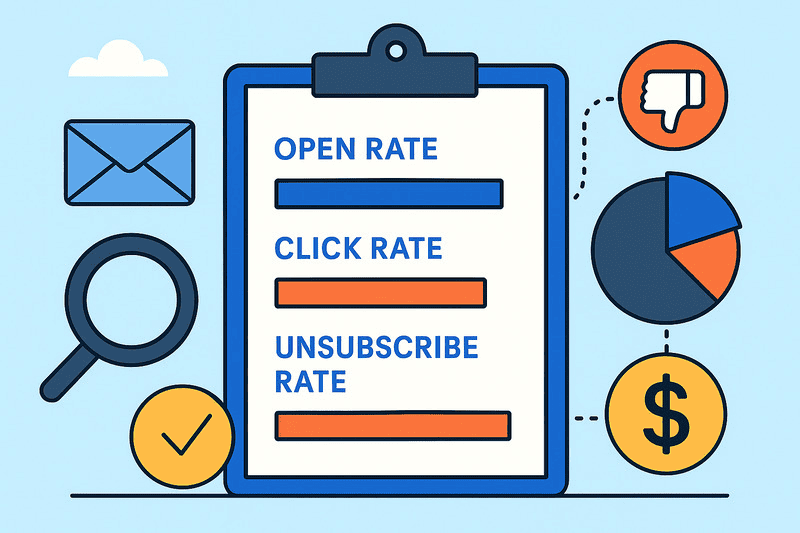
Marketers love metrics the way gamblers love odds. Each one feels like a peek of what could be when it comes to open rates, click rates, and even bounce rates. The average unsubscribe rate joined that list a while ago, and now everyone treats it like a referendum on their worth.
But numbers are rarely the full story…
Unsubscribe rate is simple on paper: the percentage of people who decided they’re done hearing from you after a campaign. But simplicity is deceptive. A 0.8% rate might be terrible for a niche B2B list and perfectly fine for a flash-sale retailer blasting daily promos. It’s not the number that matters but the story around it.
Frequency plays a role. So does timing and even intent. Some email subscribers join just for a one-time offer, while others genuinely want long-term updates. When they eventually opt out, it doesn’t mean your content failed; it might mean they got what they came for.
The upside is that every unsubscribe helps you lose dead weight. It removes unengaged contacts who do nothing more than hurt your deliverability and sender reputation. A cleaner list means:
- Better engagement
- Better inbox placement
- Fewer spam complaints.
Perfect!
So before spiralling over that small bump in opt-outs, remember: sometimes, an unsubscribe is just your list cleaning itself.
So… what’s considered ‘good’?
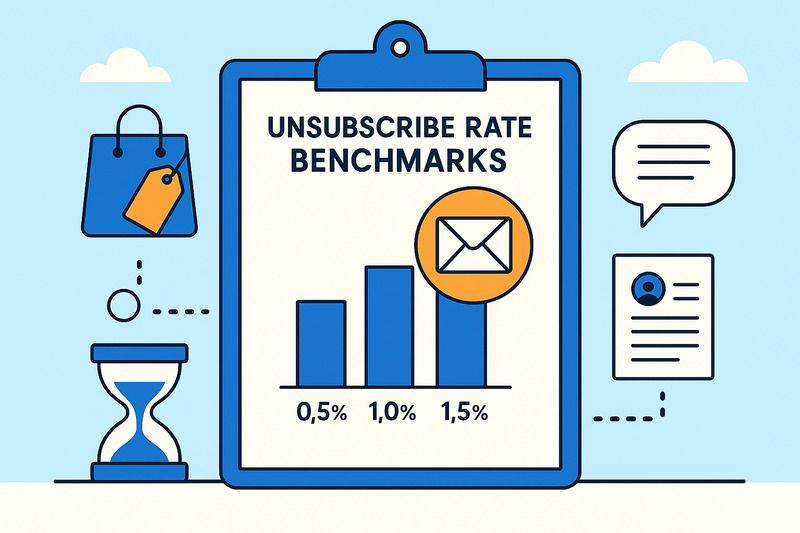
Ask ten marketers what a “good” unsubscribe rate looks like and you’ll get ten different answers, plus a few disclaimers.
Benchmarks say anything between 0.1% and 0.5% per campaign is okay. Everything past 1% usually means that you have a problem worth investigating. But those numbers only make sense in context.
Different industries, different tolerances. For example:
- Ecommerce lists send promotions constantly, so churn is expected.
- SaaS brands rely on lifecycle or onboarding flow, which means that every unsubscribe feels personal.
- Newsletters are somewhere in between, losing subscribers slowly over time as interests change.
Cadence is a factor as well. The more you email, the faster people burn out. The less you email, the faster they forget you. Somewhere between the two extremes lies that fragile balance, and you’ll find it only by keeping an eye on how your audience reacts, not by copying someone else’s schedule.
Even the age of your list is a variable to watch out for. New subscribers are curious but impulsive. They’ll bail at the first irrelevant subject line. Loyal readers stay longer, but only as long as you send relevant content that evolves with them.
So yes, keep an eye on the percentage, but don’t obsess over it. The goal isn’t to maintain a magic number; it’s to understand what that number means for your specific audience. Context defines success!
Frequency, fatigue, and the human side of data
Nobody wakes up planning to unsubscribe from your list. They just… get tired.
It starts with one too many promos, another “last chance” sale, a subject line that promises something they’ve already seen twice. Then one day, they scroll down to that tiny link at the bottom, and it’s over.
But the irony is that it’s rarely the frequency itself that drives them away. It’s usually the mismatch between how often you talk and how much value you bring when you do. Some brands send daily and stay welcome because their emails earn their place. Others send monthly and still become irrelevant.
There’s also the factor of fatigue, which was made worse by the rise of mobile devices. When your email lands in the middle of someone’s doomscroll, you have seconds to prove you’re worth the swipe. If you miss that window, you’ll likely be forgotten before the preview even loads.
Today’s average metrics also prove it: open rates and click-through rates are going down while unsubscribes are going up. But underneath those numbers is something deeply human: people lose interest because your messages don’t feel like they were for them.
So instead of counting sends per week, ask the better question: Are you saying something that’s still worth reading?
When the problem isn’t email content, but trust
More often than not, unsubscribes don’t happen because your content suddenly got bad, but because someone stopped believing you.
It starts small with small things: a bold subject line that leads to a generic offer, an email that feels a little pushier than the last, or a “weekly update” that somehow arrives four times a week. Nobody calls you out, but they eventually just stop trusting that opening your emails will be worth the hassle.
On your end, all you can see is that the numbers go down and spam complaints go up. Your campaign can look great with the design and the copy, but you will notice that something is not right.
Trust is not built once and kept forever, which is why you have to earn it every time you send a campaign out. If you fake urgency or bury your unsubscribe link, hoping to lock people in, you’re telling them exactly what kind of sender you are.
Sometimes the fix is simply a dose of humility: sending less, cleaning your list, even when it hurts your ego. Letting go of the cold leads you’ve been running after for months can often go a long way because a smaller, trusted list will outlive any campaign trying to fake a connection.
Segmentation, relevance, and the art of keeping people interested

Every marketer says they “personalize,” but almost none actually do.
Tagging ≠ understanding
Most “segmentation” stops at tagging. Just because someone slices a big list into smaller groups with “new subscribers,” “inactive users,” and “loyal customers,” it doesn’t mean these groups will respond to the same generic campaign. This way of sending is simply an illusion of control.
True segmentation happens when you understand why someone’s on your list and what they expect to get from you. The context matters more than the category.
When relevance becomes retention
People stay subscribed when the message feels meant for them, which means when the content finds them in the right moment. This can be:
- Onboarding tips for newcomers,
- Loyalty rewards for long-timers,
- Wake-up calls for sleepers who haven’t engaged in a while.
These simple tweaks reduce unsubscribes because they show awareness. They’re not tricks to pull off, but timing that respects attention.
The value of reliable data
The awareness we’re talking about only comes from seeing actual engagement. Opens can be misleading for dozens of reasons: image caching, auto-opens, bots, corporate filters, and even users previewing messages without reading them. It’s data that can do more harm than good when it comes to understanding your email list.
This is why InboxAlly shows you who’s actually engaging. That means who clicks, reads, or ignores, so you can focus on subscribers who want to hear from you. It’s how you learn whether issues point to content or deliverability.
Want to see it in action and discover how much better your email campaigns can perform? Book a free demo today.
When subscribers tell you something about your email list
Unsubscribe rates going up can scare even the savviest of marketers, but the truth is, sometimes that’s the healthiest thing that can happen to your list.
Every opt-out refines who’s left, and that’s people who want to hear from you. They are the ones who will open, click, and engage without being bribed. A lean, responsive list will always outperform a bloated one filled with non-responders.
Mailbox providers know this, too, which is why they reward senders with consistent engagement. An active audience tells Gmail and Outlook, “emails coming from this sender are good,” which works in your favor when it comes to inbox placement and reputation.
The problem is, most marketers chase size because it looks like progress. Bigger list, bigger reach, but only until they realize that half of them haven’t opened an email in months and that they’re essentially paying extra just to be ignored. So why put a subscription fee on something that’s hindering your progress?
So when people unsubscribe, don’t rush to fix it. Look at who left and why. Maybe they’ve outgrown your offer. Maybe you’ve changed direction. In any case, they’re saving you money and helping you refine your email marketing strategy.
The number isn’t the story
Unsubscribe rate is just feedback, and you can learn a lot from it: why people leave, what they expected, and what that says about your tone, timing, or trust.
It’s also worth noting that chasing a lower number is not the point because lists aren’t meant to be permanent. Just like anything built around people, they evolve and shed what no longer fits.
So if you want to keep up with the ever-changing nature of an email list, make sure your messages land right where and when they should; InboxAlly is the way to go. Check it out today and start sending campaigns that everyone wants to be a part of.
Here are the same 7 FAQs rewritten in a more human, natural, and reader-friendly tone, while staying accurate and aligned with your article’s voice: