It’s already December, and major inbox providers are done easing you into compliance. Gmail and Yahoo have fully activated their bulk-sender rules, Microsoft followed up with its own sender guidelines, and AI-driven filtering got better. Complaint thresholds are lower and fully active, and programs that looked stable a month ago now need constant attention. email service provider
That’s why, for many of you reading this, December will be an unplanned audit. Any weakness in authentication, complaint management, or list hygiene will be obvious through the metrics.
This article is a roundup of the changes bringing those outcomes. You’ll learn why your December metrics may look unfamiliar and the adjustments you should make now so that 2026 doesn’t expose the same issues on a larger scale.
Key Takeaways
- Gmail and Yahoo are finally enforcing their rules. If your DMARC isn’t set up correctly, your one-click unsubscribe link is missing, or your complaint rate gets above 0.3% you’ll see more rejections and tougher filtering.
- Deliverability depends on ongoing engagement and a good sender reputation. Authentication gets your emails through, but AI filters, privacy rules, and the new sender reporting decide whether they’re delivered.
Gmail’s crackdown: December rules for bulk senders
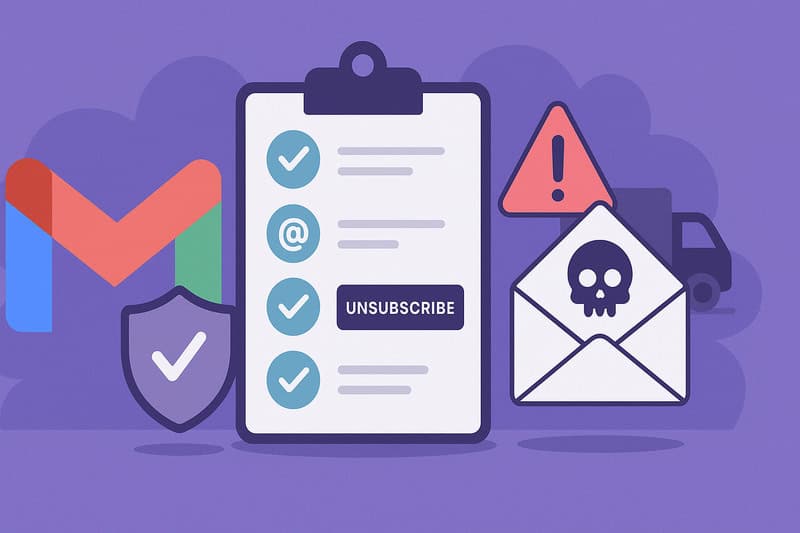
Gmail’s bulk-sender rule set is published, clear, and now weaponized. If you send more than ~5,000 messages a day to personal Gmail accounts, you’re in “bulk” territory, which means the basics are non-negotiable:
- Valid SPF(Sender Policy Framework), DKIM (DomainKeys Identified Mail), and DMARC(Domain-based Message Authentication)
- “From” address that matches your domain
- A working unsubscribe link
- Low spam complaints (below 0.3%)
Back in November 2025, Gmail stopped nudging and started blocking. Their updated documentation and Google Postmaster Tools data all point to the same idea: more 4xx/5xx SMTP errors for non-compliant senders, more borderline domains pushed to spam, and brand-new sending domains getting judged more harshly than before. December just amplified all of this because holiday volume makes every weakness 10x more obvious.
If email marketers are still debating any of these requirements, this could be the month that argument starts affecting their revenue.
Yahoo’s new Sender Hub insights: factors affecting email deliverability
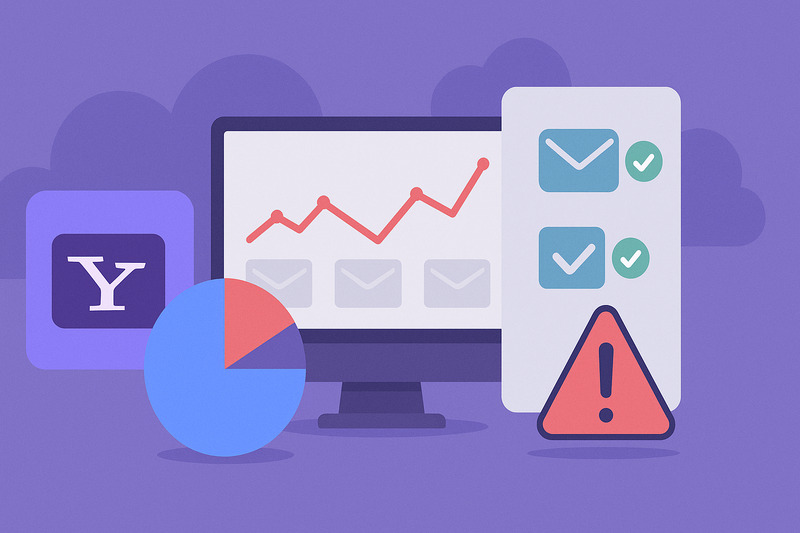
On the bright side of things, Yahoo made things very clear this fall: The new Sender Hub Insights dashboard finally gives senders two metrics they’ve been guessing at for years: a true Spam Complaint Rate and Delivered volume, both calculated directly by Yahoo for your verified domains.
The key detail: Yahoo measures complaints only from messages that reached the inbox, not every message that didn’t bounce. With a recommended limit of under ~0.3% (and ideally closer to 0.1%), it becomes very easy to see when you’re in trouble.
What to watch:
- Complaint rate per domain (not global average)
- Sudden spikes tied to specific campaigns or segments
- Yahoo-heavy lists that react differently from Gmail audiences
In December, with heavier Yahoo traffic and more emotionally-trigger-happy subscribers, one or two sloppy campaigns can push your complaint rate over the limit. That’s exactly when you should review your domain-level trends and consider booking a free InboxAlly demo to see how you can boost engagement and reduce complaints before the Insights dashboard turns red.
Authentication & brand trust: BIMI becomes a competitive signal
Brand Indicators for Message Identification, or simply “BIMI” is becoming the new “look” of the inbox. More brands are adding it every month, and during December’s crowded inbox rush, that small logo can make a big difference.
Quick snapshot of BIMI right now:
- BIMI usage grew 28% from May 2024 to January 2025
- Around 34,000 valid BIMI records were active by mid-2025
- 53.6% of BIMI setups are misconfigured
These numbers tell a story: BIMI is booming, but half the senders doing it are getting it wrong. URIports found that most BIMI-enabled domains have errors, so the logo either doesn’t appear or fails the checks that all major mailbox providers require.
When BIMI works, it’s a genuine differentiator. Your verified logo shows up right in the inbox, creating instant recognition in a sea of generic sender names. But BIMI only works if your domain is protected with a proper DMARC record set to quarantine or reject. That alone forces brands to tighten their email authentication, which is half the war.Many assume their email service provider will handle BIMI automatically, but most ESPs only host the logo. The DNS, SVG requirements, and DMARC authentication still fall on you.
In a December promo flood, BIMI helps you stand out before someone even reads the subject line. But eligibility isn’t deliverability. To get that subject line in front of a person, you need genuine engagement signals. So once BIMI and DMARC are dialed in, book a demo with InboxAlly and keep your sender reputation in top form over the holidays.
The AI race: smarter filters, smarter attacks

Gmail’s AI-driven defenses now block 99.9% of spam, phishing, and malware, and stop nearly 10 million malicious emails per minute before users ever see them. That’s the environment your campaigns land in today.
Meanwhile, attackers are using AI on the same level. Security reports throughout 2025 point to AI-written phishing emails that are polished, fluent, and frighteningly convincing. Most adults can’t reliably tell them apart from legitimate mail. Some scams use tricks like abusing email summaries or hiding dangerous code deep in HTML, which makes people trust fake messages and ignore real ones.
How attackers evolved:
- Hyper-personalized phishing written by AI
- Visual mimicry that fools even tech-literate users
- Exploiting new inbox features (like summaries and previews)
Because of this, mailbox providers default to caution. In December (the busiest month for scams and “urgent” deals), filters get even stricter. This is when sloppy high-volume senders get nailed by the collateral damage. Sudden list expansions? Not now. Purchased data? Absolutely not. Aggressive cold pushes? Straight to the spam folder.
Focus on clear branding, predictable patterns, and your highest-engagement segments. In an AI-charged inbox, you want to look like the safest, most boringly trustworthy sender in the room, because the riskier you appear, the more the filters treat you like a threat.
What to expect in December and beyond?
For anyone in email marketing, December will turn into a real-time stress test. You’ll quickly find out whether your setup can handle stricter mailbox rules and subscribers with shorter patience than ever. The fundamentals haven’t changed, but the margin for error has basically vanished.
So if you want help turning your own inbox placement into something predictable instead of painful guessing, book a free InboxAlly demo and see how behavior-driven engagement improves your sender reputation and keeps your emails landing where they should.