
Mailwarm became a first stop for a simple reason: you connect a mailbox, warmup starts, and by its own account the spam folder is less of a problem within a couple of weeks. Setup takes minutes, the dashboard shows the daily activity, and every plan comes with someone to talk to. For a new domain, or a sales team that needs outreach to land, that is a sensible place to begin, and beginning is what it is for.
The search for an alternative usually starts later, after warmup has done what warmup does. The domain is warm. Activity looks healthy. And placement has settled somewhere short of where it needs to be, at one provider in particular, or across a program that has grown past a handful of mailboxes. Warmup is one input into sender reputation, and once that input is running, the number stops responding to more of it.
That is the gap that sends people looking. Below are seven Mailwarm alternatives worth knowing in 2026, what each one actually does, and which of them can take deliverability further than warmup alone.
Key takeaways
- Mailwarm is an email warmup tool: connect a mailbox, and it exchanges mail with a network of accounts it operates to build activity on your address, with placement tracking and expert sessions included on its plans.
- Most Mailwarm alternatives warm up too, and differ in what surrounds it: a placement and monitoring layer (Warmy, Warmup Inbox), a spam test (MailReach), a bundled outreach platform (Lemwarm), a cold-email focus (Warmbox) or a demo-led deliverability platform (Folderly).
- Warmup cannot see authentication, list quality, infrastructure or reputation history, and if the problem lives in one of those, more warmup does not move it. InboxAlly runs engagement on your real campaigns and includes placement testing, blocklist monitoring, list verification and DMARC reporting, so every input is covered.
Where Mailwarm fits, and where senders outgrow it
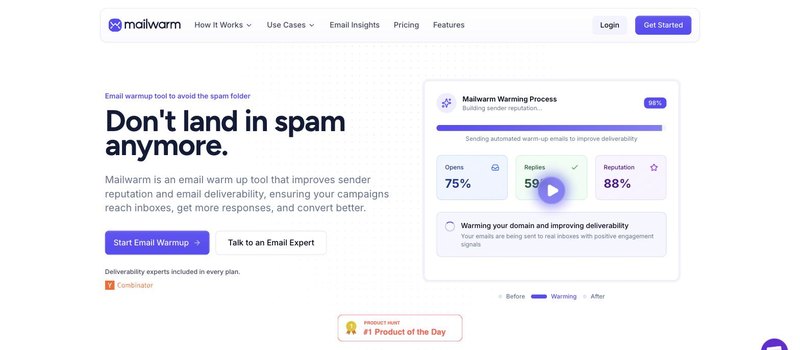
Mailwarm describes itself as an email warmup tool that improves sender reputation and deliverability. Connect Gmail, Outlook, Yahoo, Zoho or an SMTP-based platform, and your mailbox begins sending to and receiving from a network of accounts Mailwarm operates, which open the mail, move it out of spam, mark it important and reply. Its 2026 additions put live inbox-versus-spam tracking next to the activity, and its plans include sessions with its deliverability team. For one domain or a small set of mailboxes that need to start landing, it does the job it describes, and that job is warmup.
Three things send senders looking for something else.
Warmup is one input, and it cannot see the others. Sender reputation is built from engagement, but it is spent on authentication, list quality, sending infrastructure and the history a domain already carries at each provider. Warmup addresses the first of those. If mail is going to spam because SPF is misaligned, because a list is full of dead addresses, or because a domain burned its reputation at Outlook last quarter, warmup keeps running while the number stays where it is. Mailwarm’s own FAQ says as much: warmup is a critical foundation, and the best results come from combining it with proper DNS setup, list hygiene and sending patterns. The tool is not built to handle those other inputs, and a warmup-shaped product cannot tell you which one is at fault.
Reputation is earned on the mail you actually send. Providers judge a domain on how recipients treat its campaigns: your list, your content, your sending setup. Warmup activity sits beside that. It can establish a domain, and it cannot stand in for engagement on the campaigns themselves, which is why some senders see warmup metrics improve while placement on the mail that matters does not.
The shape stops fitting at scale. Per-mailbox warmup is the right shape for a founder or a sales team with a few addresses. A program sending across many domains, or through an ESP rather than a mailbox, needs the work to happen at the sending-domain level, alongside placement testing and blocklist monitoring that cover the whole program rather than one inbox at a time.
None of that is a criticism of the tool. If Mailwarm is warm and your mail is landing, stay with it and come back to this list when you need to scale past it or the number stops moving. The right alternative depends on which of those three gaps has actually opened.
The 7 best Mailwarm alternatives
1. InboxAlly
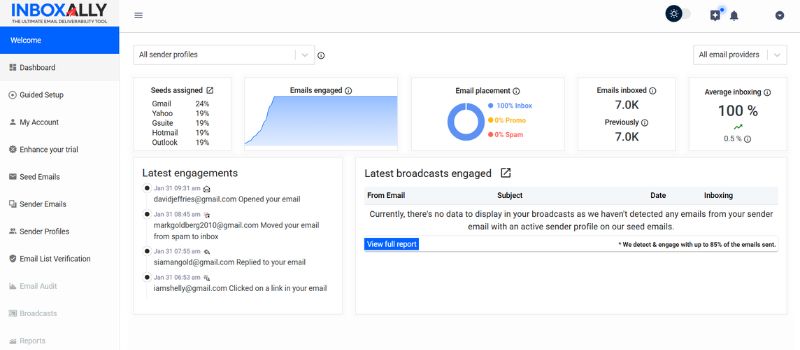
InboxAlly runs warmup as one part of a deliverability platform, and it does the part warmup alone cannot. It delivers your mail to a network of real mailboxes operated through actual browser interfaces, which open it, scroll it, reply, click, mark it important, and rescue anything that lands in spam or promotions. The seed addresses are added to your actual campaigns, so the engagement is earned on your real content, from your real sending setup, at each mailbox provider, which is the record providers consult when they decide where your next campaign belongs.
That covers the first gap. The other inputs are covered in the same subscription: inbox placement testing so you can see the result provider by provider, blocklist monitoring on every sender profile, authentication checks and DMARC reporting, and email list verification to take dead addresses out of the equation. It works at the sending-domain level with any ESP, needs no access to your sending account, and runs across multiple domains at once.
Key features:
- Builds genuine engagement history on your sending domain (opens, scrolls, replies, clicks, spam and promotions rescues), on your real campaigns
- Inbox placement testing across Gmail, Google Workspace, Outlook and Yahoo, included
- Blocklist monitoring, DMARC reporting, authentication checks and list verification on every sender profile
- Works with any sending platform or ESP without requiring account access
- A free warmup planner and placement test that need no account
Best for: Senders who have done warmup and need the rest of deliverability handled, programs running many domains or sending through an ESP, and anyone whose placement at Outlook or Microsoft 365 has not followed the warmup metrics. See the full comparison.
2. Warmy

Warmy positions itself as an all-in-one deliverability tool built around warmup. Its homepage lists warm-up alongside deliverability insights, an email seed list for placement testing, a Google Postmaster Tools integration and email verification, and it offers a seven-day trial without a card as well as a demo route. Setup is quick and it supports the major mailbox providers and ESPs.
If your reason for leaving Mailwarm is wanting a placement and monitoring layer next to the warmup, this is the closest like-for-like swap. See the full comparison.
Key features:
- Automated warm-up with a seed list for placement testing
- Deliverability insights with a Google Postmaster Tools integration
- Email verification and a no-card trial to start
What it does: Warmup with a monitoring layer around it. Not list verification or DMARC.
3. MailReach

MailReach describes itself as an email warm up and spam test tool, and those are its two products. The warmup connects to the major providers and is pitched at B2B senders; the spam test is free to run from its homepage and reports where a message lands along with the reasons. It works with the main sending platforms and is aimed at teams that want a focused tool rather than a wide platform.
The natural fit is a sender who wants a warmup product with a diagnostic attached and nothing else in the way. See the full comparison.
Key features:
- Email warmup across the major mailbox providers and ESPs
- A free spam test that reports placement and causes
- Focused, B2B-oriented scope
What it does: Warmup plus a spam test. Not list verification, blocklist monitoring or DMARC.
4. Lemwarm
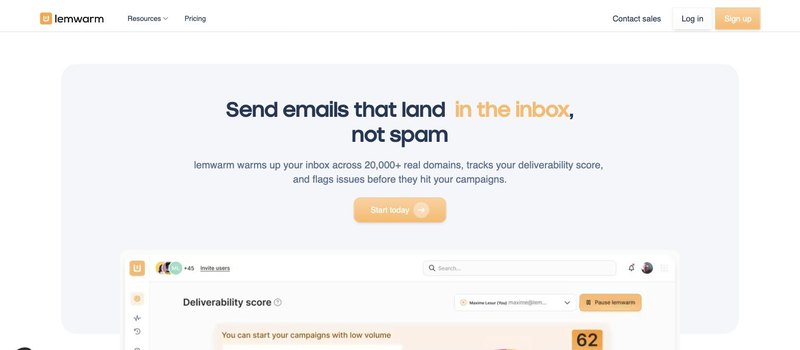
Lemwarm is lemlist’s warmup product, and its homepage describes warming up across a network of more than 20,000 domains, tracking a deliverability score and flagging issues before they reach your campaigns. It is included with every lemlist plan, which is the main reason to consider it: if you run or are moving to lemlist for outreach, the warmup is already there.
Outside lemlist, it is a warmup tool with a score attached. The decision is really about the outreach platform, not the warmup. See the full comparison.
Key features:
- Warmup across a 20,000+ domain network with a deliverability score
- Issue flagging ahead of campaigns
- Bundled with lemlist plans
What it does: Warmup bundled with an outreach platform. A lemlist decision more than a warmup one.
5. Warmbox

Warmbox is built specifically for cold email inboxes. Its homepage describes an AI-based warm-up that connects a mailbox in a couple of minutes, exchanges mail with a network of more than 35,000 inboxes, interacts with the messages, and reports the results, and it works with any provider. It offers a demo route alongside self-serve signup.
For a sales team whose only question is whether outreach inboxes are warm, it is a direct swap for Mailwarm with a similar shape. It does not add placement testing, list verification or authentication monitoring around the warmup.
Key features:
- Automated warm-up for cold email inboxes across any provider
- A 35,000+ inbox network with activity reporting
- Quick connection and self-serve start
What it does: Warmup for outreach inboxes. Not the other deliverability inputs.
6. Warmup Inbox
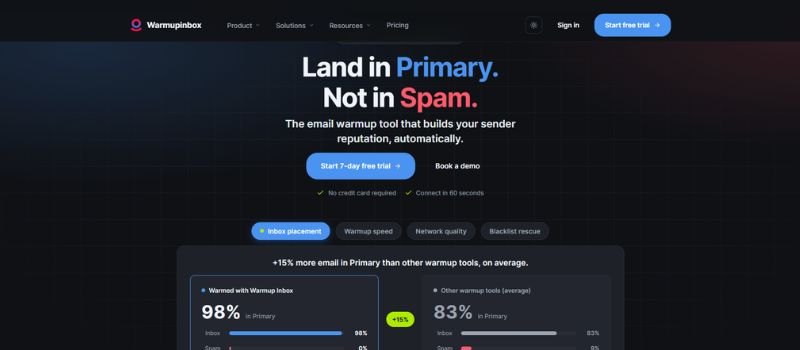
Warmup Inbox describes itself as the warmup tool that builds sender reputation automatically, and it wraps more monitoring around the warmup than most: real-time inbox placement, spam rate and bounce tracking, hourly DNS, SPF, DKIM and blocklist checks across more than 50 lists, and automatic delisting requests when a domain is caught. It supports the major providers plus SES, Mailgun and any SMTP or IMAP connection, and offers a seven-day trial without a card.
If the monitoring layer is what you want, this is the closest like-for-like, with more of it than Mailwarm. See the full comparison.
Key features:
- Warmup across a 30,000+ inbox network with volume ramping
- Real-time placement, spam rate and bounce tracking
- Hourly authentication and blocklist monitoring with automatic delisting requests
What it does: Warmup with the widest monitoring layer on this list. Not engagement on your own campaigns.
7. Folderly

Folderly describes itself as a complete email deliverability platform for B2B teams that diagnoses placement, fixes root causes and monitors continuously. Its products are Inbox Insights for pre-launch placement, IP and DNS checks, Folderly for day-to-day reputation maintenance, and Pulse for real-time mailbox health, with API and SMTP integrations and SOC 2 and ISO 27001 compliance noted on its site. It is sold through a demo rather than self-serve signup.
That makes it a different shape from the warmup tools above: a platform decision with a sales conversation attached, aimed at teams that want diagnosis and maintenance in one place. See the full comparison.
Key features:
- Pre-launch placement, IP and DNS checks
- Ongoing reputation maintenance and real-time mailbox health
- API and SMTP integrations, demo-led onboarding
What it does: Diagnosis, maintenance and monitoring as a platform, sold through a demo.
Which one to pick
The right Mailwarm alternative follows from which of its three gaps has actually opened, so start by naming the gap rather than comparing feature lists.
If you want warmup with a monitoring layer and a trial to start, Warmy or Warmup Inbox are the closest swaps. If you want a focused warmup with a free spam test attached, MailReach. If you are on lemlist or heading there, Lemwarm is already in the box. If your only question is whether outreach inboxes are warm, Warmbox. If you want a demo-led platform with diagnosis and maintenance in one place, Folderly.
There is a fourth case, and it is the most common reason people go looking in the first place. The domain is warm. The activity is healthy. And placement has stopped moving, because warmup was never the input that was holding it back, and every tool above is built around warmup.
That is the job InboxAlly does: earning engagement on your real campaigns rather than on warmup mail, at the sending-domain level, with placement testing, blocklist monitoring, list verification and DMARC reporting included so the other inputs are covered and you can watch the number you are trying to move. If you want to see where you stand first, the placement test is free and needs no account.